# OpenAI 封禁俄罗斯与伊朗两个利用 ChatGPT 开展虚假前臆影响行动的账号集群
> 原标题:Disrupting AI-enabled “false front” operations
- 来源:OpenAI:官网动态
- 发布时间:2026-10-08T00:00:00.000Z
- AIHOT:https://aihot.news/items/b33i6chgxghls2v7bng0wr0nr
- 原文:https://openai.com/index/disrupting-ai-enabled-false-front-operations
## 摘要
OpenAI 封禁了两个隐蔽影响行动,俄罗斯来源的 Dark Clark 通过假 persona Mia Clark 控制拉美智库 Social Research Center,评分达 Category 5,是报告以来首个 Category 5;伊朗来源的 Bogus Bylines 用 7 个假记者身份在全球十几家中小媒体投放近 100 篇长文,评分 Category 4。
## 推荐理由
报告基于封禁账号的第一手分析,披露了两个虚假前臆影响行动的手法与分级,读者可了解 AI 加持下隐蔽宣传的真实运作方式。
## 正文 · 中文译文
## 扰乱 AI 赋能的“假前台”行动
加载中…
[音频 1](https://openai.com/index/disrupting-ai-enabled-false-front-operations)
分享
在过去两年半的时间里,我们[报道](https://openai.com/index/disrupting-malicious-uses-of-ai-by-state-affiliated-threat-actors/)[了](https://openai.com/index/disrupting-deceptive-uses-of-ai-by-covert-influence-operations/)[许多](https://openai.com/global-affairs/an-update-on-disrupting-deceptive-uses-of-ai/)[威胁](https://openai.com/global-affairs/disrupting-malicious-uses-of-ai/)[行为者](https://openai.com/global-affairs/disrupting-malicious-uses-of-ai-june-2025/)[试图](https://openai.com/global-affairs/disrupting-malicious-uses-of-ai-october-2025/)[利用](https://openai.com/index/disrupting-malicious-ai-uses/)[我们的](https://openai.com/index/prc-linked-influence-operations-ai-debates/)[模型](https://openai.com/index/disrupting-malicious-uses-of-ai-criminal-scam-operation/)[来](https://openai.com/index/disrupting-malicious-uses-of-ai-influence-campaign-russia/)实施网络攻击、隐蔽影响力行动(IO)、诈骗以及其他违反我们使用政策的行为的方式。我们发布这些报告,是为了让监管机构、业界同行和更广泛的社会了解我们如何看待威胁行为者试图利用 AI,并揭示他们试图利用的漏洞。
我们最近封禁了两个 IO——一个来自俄罗斯,一个来自伊朗——它们将我们的模型与更传统的手段和技术结合使用,以支持复杂的“假前台”实体。它们利用这些实体将地缘政治、冲突相关的信息洗白后传递给目标受众。伊朗的行动包括一个由七个“记者”人设组成的团队,用来向世界各地中小型在线媒体投稿长篇文章;俄罗斯的行动似乎利用了拉丁美洲不知情的人在当地运营一个“智库”。
这两个行动都是多维度的,尝试了一系列不同的策略来实现其目标。除了长篇文章外,伊朗的行动还生成了大批社交媒体评论,通常围绕美伊战争相关话题。除了控制那个“智库”外,俄罗斯的行动还制作了虚假的“泄露”文件和音频脚本,其中一些我们已确认在网上传播。这两个行动还大量使用 AI 起草内部报告(俄罗斯的行动在这方面尤为突出);在这两个案例中,行为者都使用了可疑或彻头彻尾欺骗性的方法来夸大操作者的成效。
这些行动最引人注目的是,它们与 AI 时代之前的复杂影响力行动高度相似,但利用 AI 让某些工作流程变得更容易。伊朗行动运营的记者人设与假记者“[Alice(在新窗口打开)](https://www.counterpunch.org/2017/12/25/go-ask-alice-the-curious-case-of-alice-donovan-2/)[Donovan(在新窗口打开)](https://www.washingtonpost.com/world/national-security/kremlin-trolls-burned-across-the-internet-as-washington-debated-options/2017/12/23/e7b9dc92-e403-11e7-ab50-621fe0588340_story.html?utm_term=.32e178d370c3)”有相似之处,后者是俄罗斯军事情报机构的幌子,其文章曾在 2016-17 年被多家西方媒体发表。2020 年,与俄罗斯互联网研究机构过往活动有关联的人运营了一个名为“[PeaceData(在新窗口打开)](https://about.fb.com/news/2020/09/august-2020-cib-report/)”的假“新闻”媒体,拉拢世界各地不知情的记者为其撰稿。
这些行动的潜在影响范围也非同寻常。使用 IO [Breakout Scale(在新窗口打开)](https://www.brookings.edu/articles/the-breakout-scale-measuring-the-impact-of-influence-operations/),该量表将 IO 按 1(最低)到 6(最高)评分,我们会将源自俄罗斯的行动评估为**第 5 类**。这是我们开始报告以来首次破坏的第 5 类行动。源自伊朗的行动达到**第 4 类**。两者都成功将其内容(并非全部由我们的模型生成)送入主流媒体渠道,而不仅仅是发布在社交媒体上。这与我们在过去两年半中揭露的 30 起秘密影响行动中观察到的模式一致:那些试图将内容送入真实媒体渠道、而非依赖虚假社交媒体分发的行动,往往具有最高的潜在影响范围和影响力。
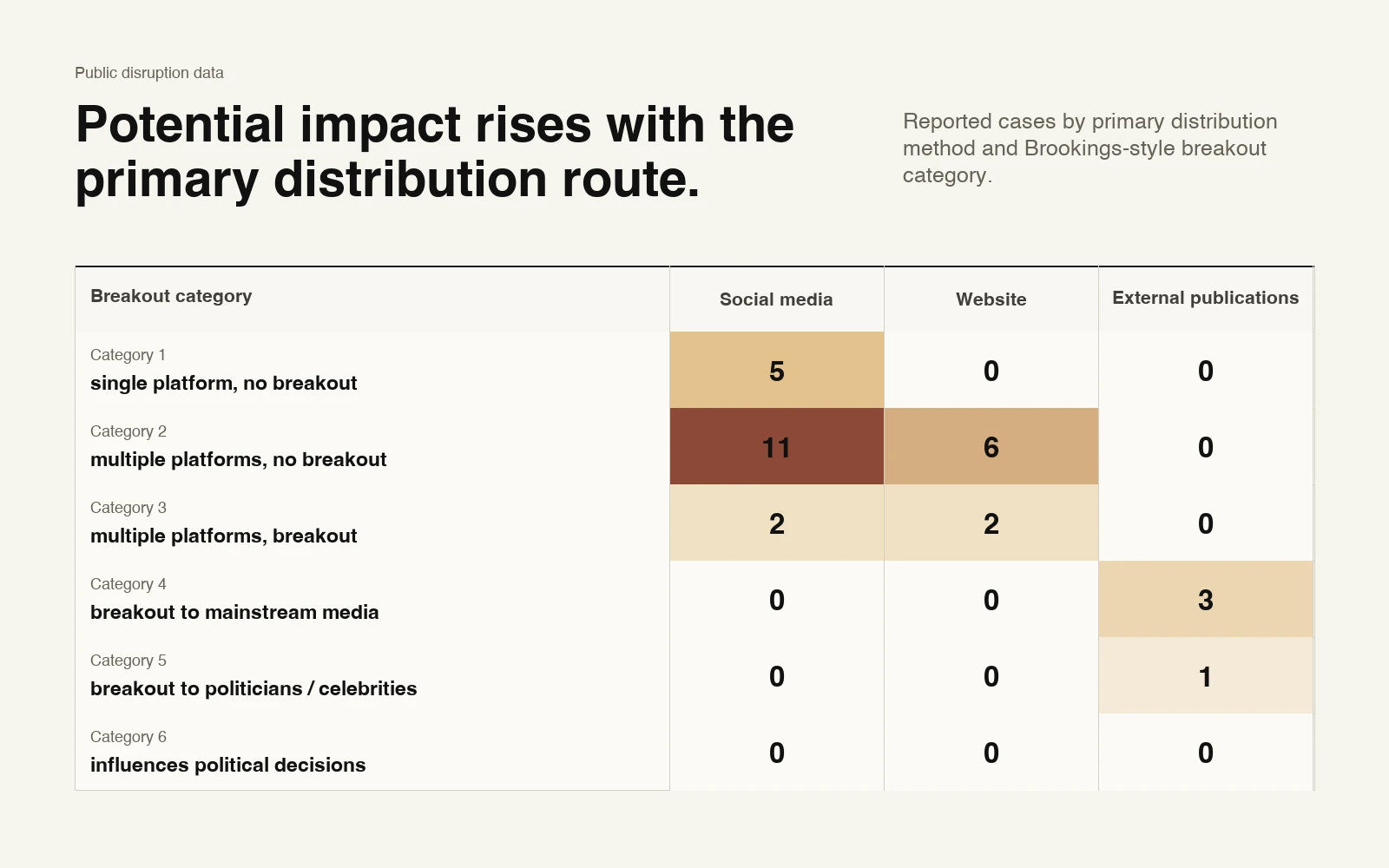
_自 2024 年初以来我们揭露的 30 起 IO 的矩阵,按主要分发方式(社交媒体、行动运营的网站、外部出版物)和 Breakout Scale 评分评估。使用多种分发方式的行动,例如运营网站并在社交媒体上推广,按似乎构成行动核心的方式分类。_
AI 可以赋予此类虚假前台行动更大的规模、效率、语言流畅度和编辑能力。运营者可以利用这些优势来利用毫无戒心的受害者,例如员工或编辑,并将他们的内容呈现在完全不知道幕后黑手是谁、或动机为何的受众面前。这些行动还展示了威胁行为者使用虚假人设和实体来实现其目标的复杂性和老练程度。了解威胁行为者在这些行动中利用的漏洞,以及这些漏洞如何转化为受众和影响范围,对于在各类组织中维持稳健防御至关重要。
但这些虚假前台行动的隐蔽性也使其特别容易受到负责任的披露的打击。“Alice Donovan”和“PeaceData”都在被曝光后停止了活动。这就是我们报告这些虚假前台行动的目标:让进一步的研究和破坏更容易——并让继续这些行动更难。
## 俄罗斯:行动“Dark Clark”
_源自俄罗斯的行为者在拉丁美洲开展影响力行动。_
### 行为者
我们封禁了一组源自俄罗斯的 ChatGPT 账户。他们使用 ChatGPT 执行一系列与针对拉丁美洲各国的秘密影响行动相关的任务。这些活动大多似乎旨在破坏乌克兰在该地区的声誉,但有些似乎旨在影响当地政治结果,尤其是在阿根廷和玻利维亚。大多数运营者用俄语提示;一人用西班牙语提示,但似乎仍位于俄罗斯。我们已与相关当局分享了此案的信息。
操作人员使用 ChatGPT 执行三项主要任务:撰写关于其活动(以及其他他们可以合理邀功的人的活动)的内部报告、为其行动创建内容,以及起草关于一个自称位于拉丁美洲、名为社会研究中心(SRC)的“研究平台”的绩效报告。他们似乎通过一个名为“Mia Clark”的虚假人设控制了 SRC;为纪念这个名字,我们将这一行动昵称为“Dark Clark”。由于我们不允许从俄罗斯访问我们的模型,他们使用 VPN 连接到我们的服务。
在其内部报告中,操作人员声称已在拉丁美洲各地散布虚假消息,以破坏乌克兰或当地领导人。其中一些虚假信息已被[开源(在新窗口中打开)](https://www.opendemocracy.net/en/russia-bolivia-south-america-putin-evo-morales-wagner-prigozhin-covert-operations-propaganda-disinformation-foreign-interference/)[研究人员(在新窗口中打开)](https://forbiddenstories.org/projects_posts/propaganda-machine-secret-files-russia-influence/)归因于一个名为“Politology”或“La Compania”的俄罗斯实体,据报该实体是瓦格纳集团以及俄罗斯寡头叶夫根尼·普里戈任创立的其他实体的继承者。操作人员还要求我们的模型翻译或解释有关 Politology 和瓦格纳的公开报道,其频率远高于询问任何其他源自俄罗斯的网络。
这一行动在两个方面不同寻常。首先,它似乎成功拉拢了拉丁美洲的个人为 SRC 工作。俄罗斯操作人员关于 SRC 的报告提及薪资标准、招聘和解雇等问题的决策,表明他们控制着该实体,而非与其合作。现有证据表明,SRC 在拉丁美洲的员工并不知道自己在为一个俄罗斯团体工作。与我们[最近曝光的](https://openai.com/index/disrupting-malicious-uses-of-ai-influence-campaign-russia/)另一个与俄罗斯有关联的“智库”不同,SRC 似乎通过其被拉拢的员工制作了大部分原创内容。这是我们过去两年半中破坏的最复杂的运营前台身份尝试。
其次,一些开源证据表明,Dark Clark 的虚假信息传播范围足够广,以至于引发了[事实核查(在新窗口中打开)](https://lupa.com.ec/verificaciones/noboa-mercenarios-ucrania-ecuador/)和[官方否认(在新窗口中打开)](https://x.com/GildaAlcivarOk/status/2067034085021676030),这表明其渗透程度超出了我们过去两年中破坏的任何影响力行动。该行动声称在秘鲁植入的一条虚假信息甚至加剧了乌克兰与波兰之间的公开紧张关系。
### 内部报告
操作人员使用 ChatGPT 的主要方式是起草并更新给一位未知上级的内部报告。这些定期报告描述了在拉丁美洲开展秘密影响力行动的努力。它们涵盖三个主要工作流:贬低乌克兰并破坏乌克兰武装部队招募的努力;干涉某些国家(尤其是玻利维亚和阿根廷)国内政治的努力;以及 SRC 的管理。在大多数情况下,我们未观察到威胁行为者使用我们的模型为这些行动创建内容,而只是用于报告这些行动(少数例外情况在[下文](https://openai.com/index/disrupting-ai-enabled-false-front-operations#creating-fakes)描述)。
这些报告包含丰富的战术细节,揭示了该行动如何试图破坏乌克兰和一些国家领导人,尤其是阿根廷、玻利维亚和厄瓜多尔的总统。一些报告描述了诱骗当地人开展操作人员可加以利用的活动的努力;另一些则描述了操作人员声称已散布的虚假“泄露”。
在两起案例中,证据将操作者与关于“Politology”的公开报道联系起来。操作者报告称,2024年,他们针对阿根廷总统哈维尔·米莱开展了两次行动。首先,他们称散布了一则虚假报道,称米莱为其爱犬购买了卡地亚镶宝项圈。其次,他们声称付钱给当地演员在布宜诺斯艾利斯张贴反米莱涂鸦。根据泄露的文件,这两项说法均已被[公开(在新窗口中打开)](https://www.opendemocracy.net/en/russia-bolivia-south-america-putin-evo-morales-wagner-prigozhin-covert-operations-propaganda-disinformation-foreign-interference/)[归因(在新窗口中打开)](https://forbiddenstories.org/projects_posts/propaganda-machine-secret-files-russia-influence/)于“Politology”和“La Compania”。
还有更多造假行为此前未被与俄罗斯信息行动联系起来。例如,操作者声称,2026年5月,他们创建了一个虚假电子邮件地址,冒充来自秘鲁利马的教育区域局。他们利用该地址指示该地区的学校在全国文化和语言多样性日(5月21日)举办专门纪念乌克兰的活动。这些电子邮件明确指示要提及二十世纪颇具争议的乌克兰民族主义者斯捷潘·班德拉等人,一些乌克兰人视其为独立人物,但在俄罗斯和波兰,他被与法西斯主义、战时合作和暴行联系在一起。据操作者称,一些学校回复了该虚假电子邮件地址,确认他们举办了此类活动,甚至提供了照片。
操作者随后声称,他们在秘鲁和波兰的媒体上炮制了关于这些活动的报道,同时指控乌克兰“输出”极端民族主义意识形态,引发众怒。开源搜索在[秘鲁(在新窗口中打开)](https://www.extra.com.pe/actualidad/polemica-en-colegio-de-lima-actividad-sobre-ucrania-pone-en-el-centro-del-debate-a-figuras-historicas-noticia/)[和(在新窗口中打开)](https://trome.com/actualidad/nacional/ucrania-acerca-su-historia-a-estudiantes-en-peru-embajada-noticia/)[波兰(在新窗口中打开)](https://myslpolska.info/2026/07/02/piskorski-zelenski-jako-kontynuator-bandery/)[媒体(在新窗口中打开)](https://i.pl/petlura-bandera-i-zelenski-w-peru-jak-ukrainski-nacjonalizm-rozprzestrzenil-sie-za-ocean/ar/c1p2-29161355)以及[匈牙利(在新窗口中打开)](https://web.archive.org/web/20260705015147/https://dailynewshungary.com/how-portraits-of-bandera-and-zelenskyy/)的一家英文出版物中找到了与这一说法相符的报道(部分文章此后已被删除)。[一些(在新窗口中打开)](https://diariouno.pe/2026/07/19/actividades-de-la-embajada-de-ucrania-en-peru-intentan-involucrar-a-lima-en-conflictos-internacionales/)[文章(在新窗口中打开)](https://myslpolska.info/2026/07/02/piskorski-zelenski-jako-kontynuator-bandery/)包含了波兰欧洲议会议员的反应,他提议将表现出“反波兰性”的人宣布为波兰的_不受欢迎的人_。因此,俄罗斯的造假既利用了、也助长了乌克兰人与波兰人之间的历史紧张关系。
同样,在6月,操作者声称他们使用另一个虚假电子邮件地址,诱骗厄瓜多尔的学校举行宣誓效忠总统丹尼尔·诺沃亚和私人军事承包商黑水公司前负责人埃里克·普林斯的仪式。操作者声称,这一事件在厄瓜多尔引发众怒,并迫使政府出面否认这一造假,从而将其放大到全国受众。开源研究再次在[媒体(在新窗口中打开)](https://www.ecuavisa.com/amp/sociedad/cuenta-falsa-educacion-lealtad-daniel-noboa-erik-prince-escuelas-20260616-0105.html)[报道(在新窗口中打开)](https://www.primicias.ec/sociedad/ministerio-educacion-juramento-escolar-correos-falsos-profesores-denuncia-video-125589/)中找到了与这一说法高度相似的[厄瓜多尔(在新窗口中打开)](https://ecuadorchequea.com/lo-que-sabemos-y-lo-que-no-sobre-juramento-a-noboa-en-las-escuelas-de-quito-y-guayaquil/)[媒体(在新窗口中打开)](https://www.expreso.ec/politica/desmienten-video-ninos-haciendo-juramento-daniel-noboa-erik-prince-286024.html)内容,甚至还有厄瓜多尔教育部长的一篇[详细驳斥(在新窗口中打开)](https://x.com/GildaAlcivarOk/status/2067034085021676030)。
这些操作者使用了一系列技术来支撑他们的虚假故事。根据他们的内部报告,他们在3月针对厄瓜多尔散布了两条不同的假消息。一条使用了据称是乌克兰驻厄瓜多尔领事的一段伪造音频,其中据称他对厄瓜多尔人发表了贬损性言论。我们的开源调查在TikTok上发现了一条与此说法完全吻合的帖子;它似乎只获得了有限的互动量。另一条描述了一段在X和TikTok上以一家真实新闻频道的标志传播的伪造视频片段,声称诺沃亚政府正在招募年轻男子前往乌克兰作战。厄瓜多尔的[事实核查人员(在新窗口中打开)](https://lupa.com.ec/verificaciones/noboa-mercenarios-ucrania-ecuador/)描述了一场在4月初与这一描述相符的行动。
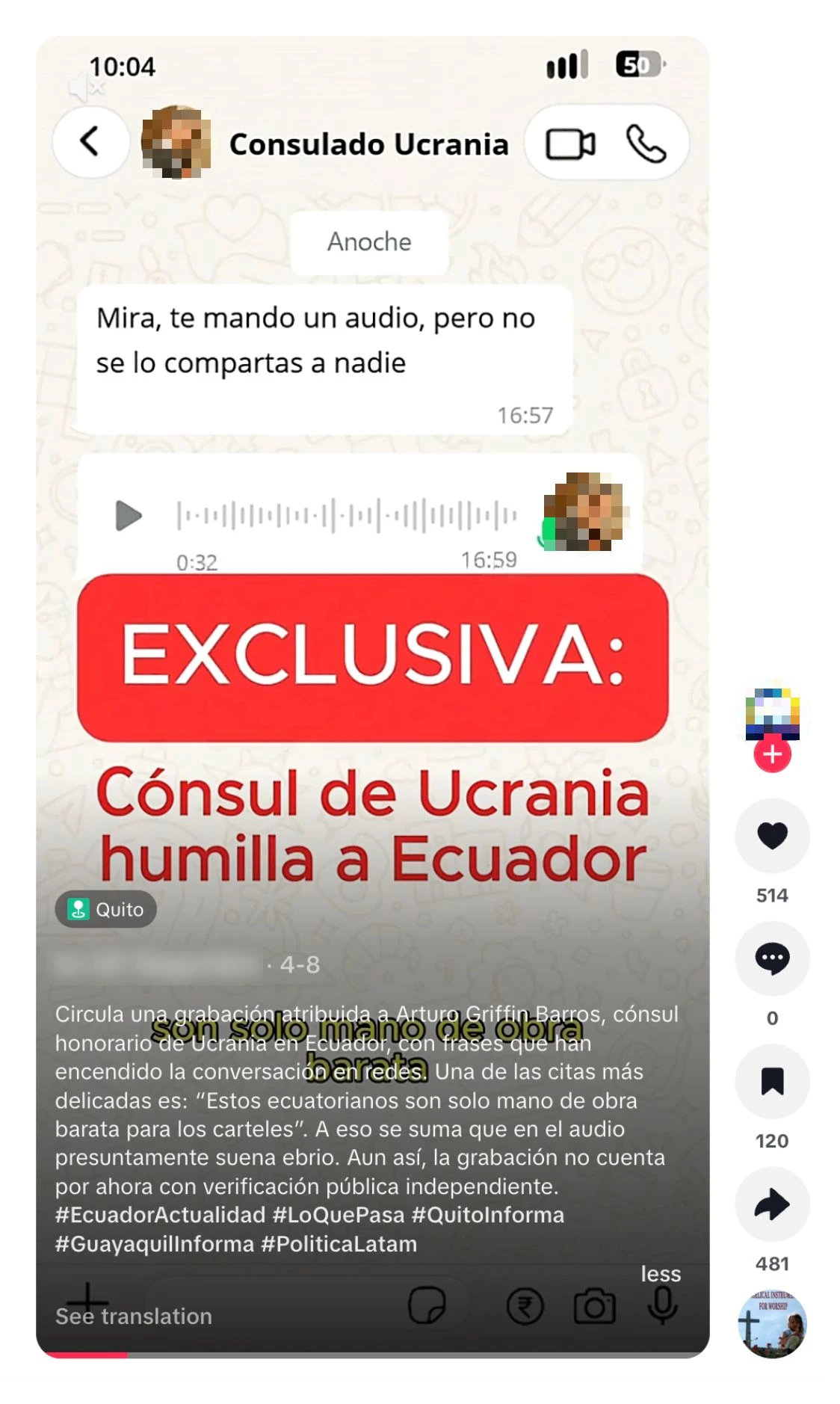
_2026年4月8日发布的TikTok视频,包含该行动声称的伪造音频,并归因于乌克兰领事。_
另一份内部报告描述了他们在5月底反政府抗议活动达到高潮时在玻利维亚散布的一条假消息。操作者明确将这场行动的目标描述为加剧抗议活动周围的危机。这场行动包含一段伪造的录音,据称是国家水务公司EPSAS的一名员工所说,称政府将切断行政首都拉巴斯的水供应,并宣布进入紧急状态。我们的开源研究发现了与这一说法相符的[辟谣(在新窗口中打开)](https://boliviaverifica.bo/falso-no-se-corta-el-agua-potable-en-un-estado-de-sitio/?utm_source=chatgpt.com)以及EPSAS的[官方否认(在新窗口中打开)](https://www.facebook.com/photo.php?fbid=1426877002799780&set=pb.100064324827050.-2207520000&type=3)。
其他内部报告包含了一些我们无法从公开来源核实的假消息,可能是因为它们已被删除,或者未能传播开来。例如,操作者声称在1月散布了一则消息,称一名巴西网红兼模特被乌克兰大使馆的代表贩运到乌克兰,并已在基辅被杀。6月,他们声称在玻利维亚散布了另一段伪造音频片段,这次据称来自玻利维亚中央银行的一名员工,警告该银行即将限制现金取款。他们还声称散布了一封伪造的该国碳氢化合物机构的信函,警告将限制向私家车销售燃料。
在其他报道中,运营者要求我们的模型帮助识别目标国家中他们可以认领的事件,即使他们并未参与其中。例如,在阿根廷,运营者声称阿根廷外交部长在联合国委员会关于福克兰/马尔维纳斯群岛的会议上引用了他们的行动。运营者声称是他们播下了这些论点:自决原则不适用于这些岛屿,以及英国在那里维持了不成比例的军事存在。事实上,这两个论点多年来一直是阿根廷官方立场的一部分[许多](https://www.cancilleria.gob.ar/es/actualidad/noticias/190-anos-de-la-ocupacion-ilegal-de-las-islas-malvinas)[年](https://cancilleria.gob.ar/es/actualidad/comunicados/malvinas-la-firme-postura-argentina-presentada-por-timerman-en-la-onu-recibio)。同样,6月,巴西媒体[报道](https://www.poder360.com.br/poder-internacional/brasileiro-diz-ter-sido-capturado-por-forcas-russas-na-ucrania/)了一名巴西公民前往乌克兰参军、被俄军俘虏、随后在电视声明中声称自己被骗参战的案例。ChatGPT运营者试图声称这篇报道转载了他们行动的信息;事实上,它[引用了被俘者自己的视频](https://www.poder360.com.br/poder-internacional/brasileiro-diz-ter-sido-capturado-por-forcas-russas-na-ucrania/)。这表明运营者试图开展一场针对自己雇主而非任何外部受众的影响力行动。
### “研究平台”
运营者的一些报告提到一个自称为“研究平台”的机构,名为社会研究中心(俄语:Центр социологических исследований)。据SRC网站称,它专注于拉丁美洲的印度侨民以及印度与该地区国家的关系。
内部报告表明,运营者控制着这家智库,而不仅仅是与之合作。例如,他们提到了招聘和解雇决定、薪酬标准、人员配置计划以及正在进行的研究项目。至关重要的是,他们还表示,运营者创建了一个名为“Mia Clark”的虚假人设,用于运营该行动的社交媒体活动,并与拉丁美洲当地员工互动。现有证据表明,这些当地员工并不知道自己是在为俄罗斯的行动工作,并且是真诚地执行研究任务。这种利用不知情的中间人的做法,与早先同样与普里戈任圈子有关联的俄罗斯行动“PeaceData”极为相似,Meta曾在2020年[曝光](https://about.fb.com/news/2020/09/august-2020-cib-report/)该行动。
从俄罗斯运营者的报告来看,他们在拉丁美洲的当地员工采访了该地区的专家和评论员,然后根据调查结果起草研究论文。主题范围从对金砖国家集团公众舆论的广泛分析,到对雅伊尔·博索纳罗和路易斯·伊纳西奥·卢拉·达席尔瓦总统执政期间巴西经济的详细比较。有时,俄罗斯运营者在研究项目发表之前就起草了状态报告,表明他们密切参与了制作过程。我们在SRC网站上找到了远超过60篇文章,其中绝大多数似乎是原创作品。这使Dark Clark与我们最近曝光的俄罗斯来源行动有所不同,后者也以智库为幌子,但大部分内容都是抄袭的;这表明其意图是建立一个更持久的前线实体,并在整个拉丁美洲建立联系。
为了推广 SRC 的工作,俄罗斯运营者声称他们曾试图建立一个社交媒体资产网络。根据他们的报告,当世界不同地区的运营者试图访问同一批账号时,这一社交媒体活动遇到了问题,导致账号受到限制。这一点可以在公开记录中看到痕迹:例如,SRC 在 X 上的主要账号的透明度设置显示其位置在德国(可能是使用 VPN 的结果),但却是通过俄罗斯联邦 App Store 连接的,而其一个 Instagram 账号的透明度设置显示管理员位置在委内瑞拉。我们识别出的三个带有 SRC 品牌的 Facebook 账号,其粉丝数都不足以触发管理员位置设置。
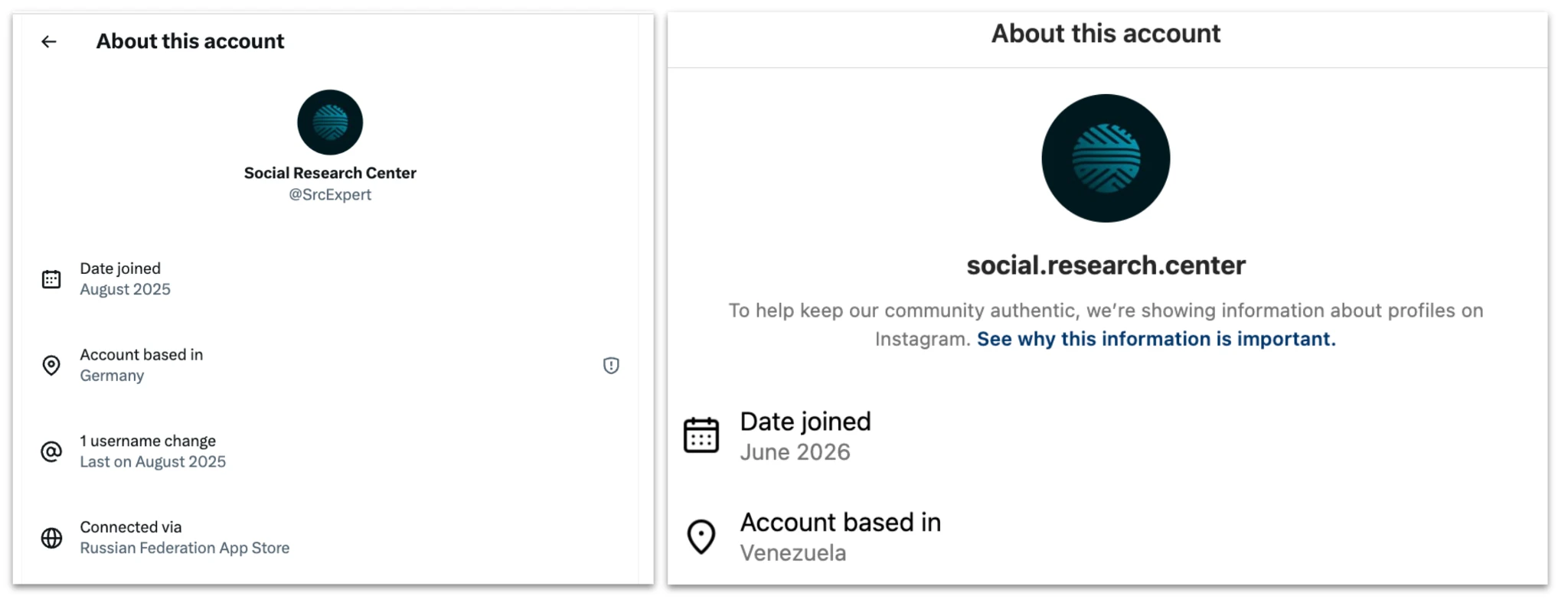
_左图,与 Social Research Center 关联的 X 账号。注意透明度设置显示该账号通过俄罗斯联邦应用商店连接。右图,SRC 的 Instagram 账号:注意委内瑞拉的位置。_
运营者报告称,他们在 LinkedIn 上遇到了特别的问题,他们表示自己创建了一个明确虚假的账号来代表 SRC,但随后却难以为其建立网络。根据他们的报告,解决办法是创建更多虚假账号来关注第一个账号,使其看起来更可信。截至 8 月 17 日,一个同样带有 Social Research Center 品牌的 LinkedIn 账号拥有 961 名关注者,并声称有 200-500 名员工,但只列出了两名员工。
### 创建虚假账号
偶尔,除了使用 AI 更新报告外,运营者确实也会要求我们的模型帮助设计和创建可用于其行动的文本:例如,请求帮助确保他们的虚假账号使用适合不同国家的正确口音、词汇和机构风格。这在整体工作量中占比较小,也许是因为该行动似乎至少包括一名来自拉丁美洲的西班牙语母语者,因此对 AI 语言支持的需求较少。
例如,有一次,其中一名讲俄语的运营者要求模型用俄语帮助起草一封信,该信将把乌克兰驻巴拿马名誉领事牵连进腐败丑闻。随后,讲西班牙语的运营者要求模型将这封信翻译成西班牙语,并生成一段配套的音频脚本。一张与信件文本相符的照片,配上与运营者脚本相符的画外音,被一个自称是新闻媒体、但带有巴拿马 [TVN Noticias(在新窗口打开)](https://www.tvn-2.com/) 标志的账号发布在 TikTok 上。该 TikTok 频道只有一名关注者,并在发布这一虚假内容后停止发帖。
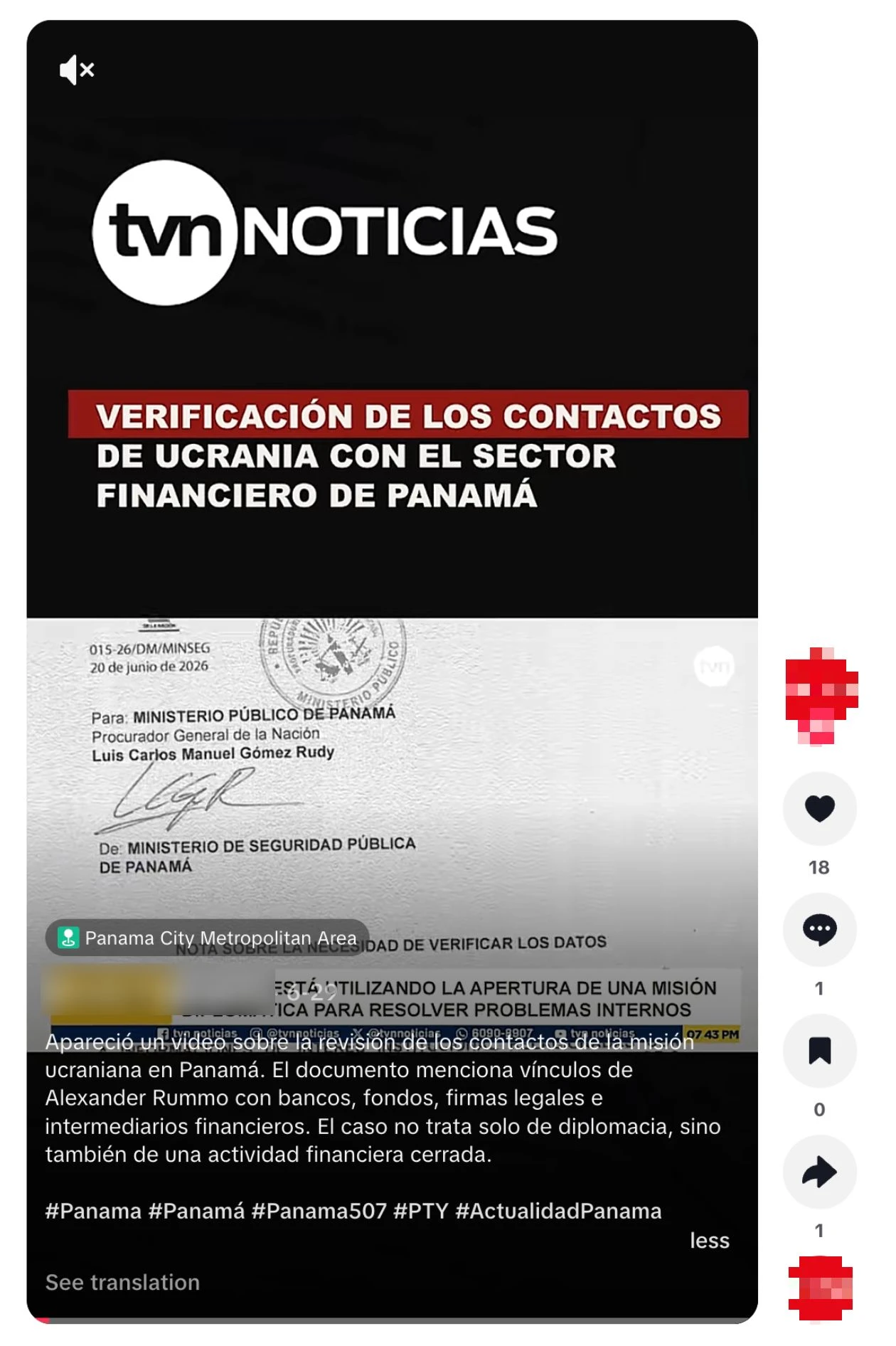
_TikTok 帖子展示了这封信,其文本由该行动生成,画外音脚本同样由该行动生成。_
另一次,在俄罗斯的讲西班牙语的运营者给模型一份俄语脚本,声称 Noboa 侮辱了厄瓜多尔的穷人,并要求模型将其翻译成厄瓜多尔西班牙语。第三次是在 3 月,同一用户要求模型校对一份西班牙语合同草稿,该合同由一家名为“International Security Solutions FZE”的公司与厄瓜多尔的一名个人签订,声称在乌克兰提供基础设施服务。用户的问题集中在如何改进语言和排版,包括询问哪些词应该加粗。
一旦措辞敲定,用户关于合同的提示就结束了。然而,开源研究显示,这份“合同”的图片随后[在社交媒体上流传(在新窗口中打开)](http://ecuadorchequea.com/cuando-una-cuenta-falsa-habla-como-si-fuera-un-medio-como-operan-las-paginas-que-usurpan-la-imagen-de-prensa-en-ecuador/)。它被用来支持这样一种说法:Noboa政府与一家幌子公司合作,诱骗厄瓜多尔人被招募进乌克兰军队。这一假消息传播得足够广泛,以至于在4月初引发了一次[事实核查(在新窗口中打开)](https://lupa.com.ec/verificaciones/noboa-mercenarios-ucrania-ecuador/):事实核查人员得出结论,该公司“并未出现在厄瓜多尔公司、证券和保险监管局的登记册中”。
### 影响
这一行动的影响需要特别谨慎地评估。如上所述,操作者的主要手法之一是将与他们行动无关的活动归功于自己。因此,他们在内部报告中自称的影响不能照单全收。同样,他们声称已植入的一些假新闻并未在开源研究中出现,可能是因为它们是在非公开渠道传播的、已被删除,或者实际上并未发布。
然而,开源证据使我们能够证实他们所做的一些声称。该行动声称已传播的一些假消息随后被事实核查人员报道,并被政府辟谣,这表明它们传播得足够广泛,值得作出回应。在其他情况下,我们能够在网上识别出与该行动生成内容高度匹配的内容。最值得注意的是,该行动声称骗过一所秘鲁学校举办了一场描绘Bandera的活动,此事随后在拉丁美洲和欧洲均被报道,并且似乎至少引发了一位波兰欧洲议会议员的评论。
使用IO[突破量表(在新窗口中打开)](https://www.brookings.edu/articles/the-breakout-scale-measuring-the-impact-of-influence-operations/)——该量表将IO按1(最低)到6(最高)评分——我们评估该行动属于**第5类**,有证据表明它引发了多个国家政界人士的公开评论。这是我们开始发布报告以来首次 disruption 的第5类行动。
## 伊朗:“虚假署名”行动
_源自伊朗的行动,以欺骗性署名在在线新闻媒体上投放长篇文章。_
### 行为者
我们封禁了一批源自伊朗的ChatGPT账户。他们用波斯语提示,并生成波斯语和英语内容。行为者通过使用VPN访问ChatGPT来隐藏其位置。
该行动利用我们的模型润色长篇文章和编辑提案、生成社交媒体评论,并完善内部报告。操作者使用七个不同的署名来投递他们的文章,因此我们将他们的活动称为“虚假署名”。这些长篇文章聚焦于美伊冲突。大多数评论同样涉及这场冲突;少数涉及美国政治,通常是在这场冲突的更广泛背景下。
其主要工作流的实际影响差异显著。我们识别出近100篇以该行动署名发表或联合发布在全世界约十几家在线媒体上的文章。这些媒体多为中小型,通常聚焦国际事务、地缘政治和中东事件。相比之下,社交媒体评论似乎没有产生实质性的互动,无论是点赞、分享还是进一步回复。事实上,操作者的内部报告使用了一种欺骗性的计算方法来衡量其社交媒体影响,可能是为了夸大操作者的表面成效。
整体活动与一个商业行为者运营的受雇影响力行动相符,但我们无法识别出具体的行为者。我们已就此案与相关当局分享了信息。
### 植入文章
该行动影响最广的活动是让ChatGPT审阅和润色关于美伊冲突地缘政治的长篇英文文章。典型的提示要求模型根据某家特定在线媒体的投稿标准评估一篇英文草稿,并提出修改建议以确保符合要求。一旦操作者批准了修改,他们便要求模型生成一封电子邮件,用于向相关在线媒体的编辑推介这篇文章。
这些推介信息使用了七个不同的虚假署名起草:Ervin B. Hoskins、Noah Lamington、Sophia Gonzalez、Michael Harrison、Ericka Feusier、Jenny Williams和Alice Johnson。根据与其中一些文章一同发布在网上的个人简介,每个人设都自称是西方记者(通常是美国人,不过Noah Lamington人设的简介声称其在新西兰),往往关注国际政治、中东、人权或冲突。对于其中一个人设“Michael Harrison”,操作者要求模型自行撰写简介。(值得注意的是,Meta在3月[捣毁(在新窗口打开)](https://transparency.meta.com/sr/first-half-2026-Adversarial-threat-report/)了一个伊朗影响力行动,其中也有一个“Michael Harrison”记者人设。)
其中一些人设由一系列社交媒体平台上的账户作为支撑。例如,Michael Harrison人设在Medium、X和Facebook上都有支撑账户。Ervin B. Hoskins人设在X、Facebook、Instagram和Threads上都有账户。该人设的简介自称是“一名美国自由撰稿人”,但社交媒体透明度设置显示这些账户位于伊朗。
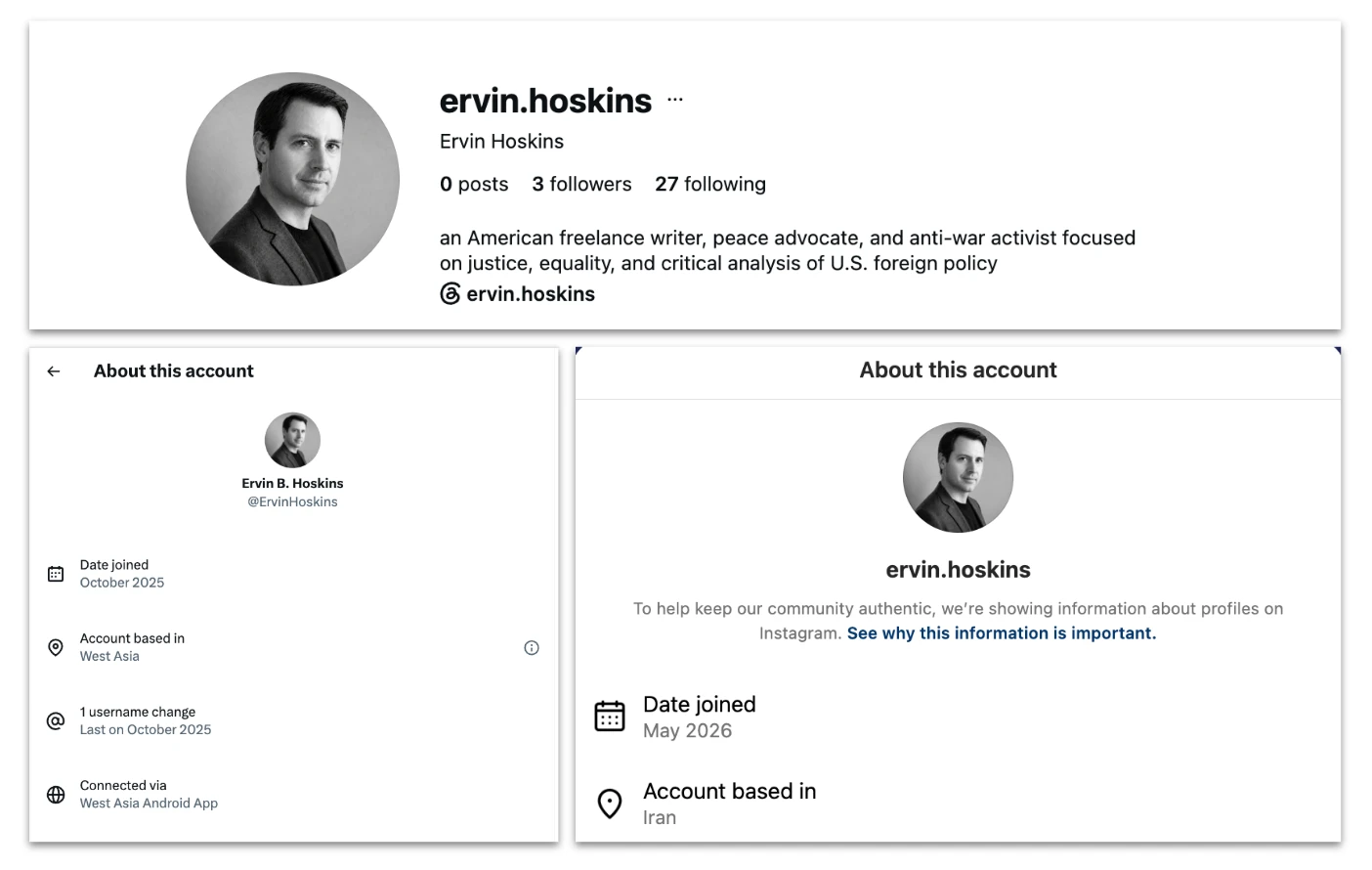
_上:Ervin Hoskins人设的Instagram简介。左下:X账户透明度信息,显示使用了West Asia安卓应用。右下:Instagram账户透明度信息,显示位置在伊朗。Meta于8月封禁了该Instagram账户。_
利用开源调查技术,我们识别出近100篇以操作者某一署名发表在十几家不同出版物上的文章。这些出版物通常聚焦国际事务、地缘政治和中东事件,有时持反战或进步主义观点。我们识别出的最早文章发表于2025年7月,最晚的发表于2026年10月。美伊冲突爆发后,文章发布频率大幅增加。
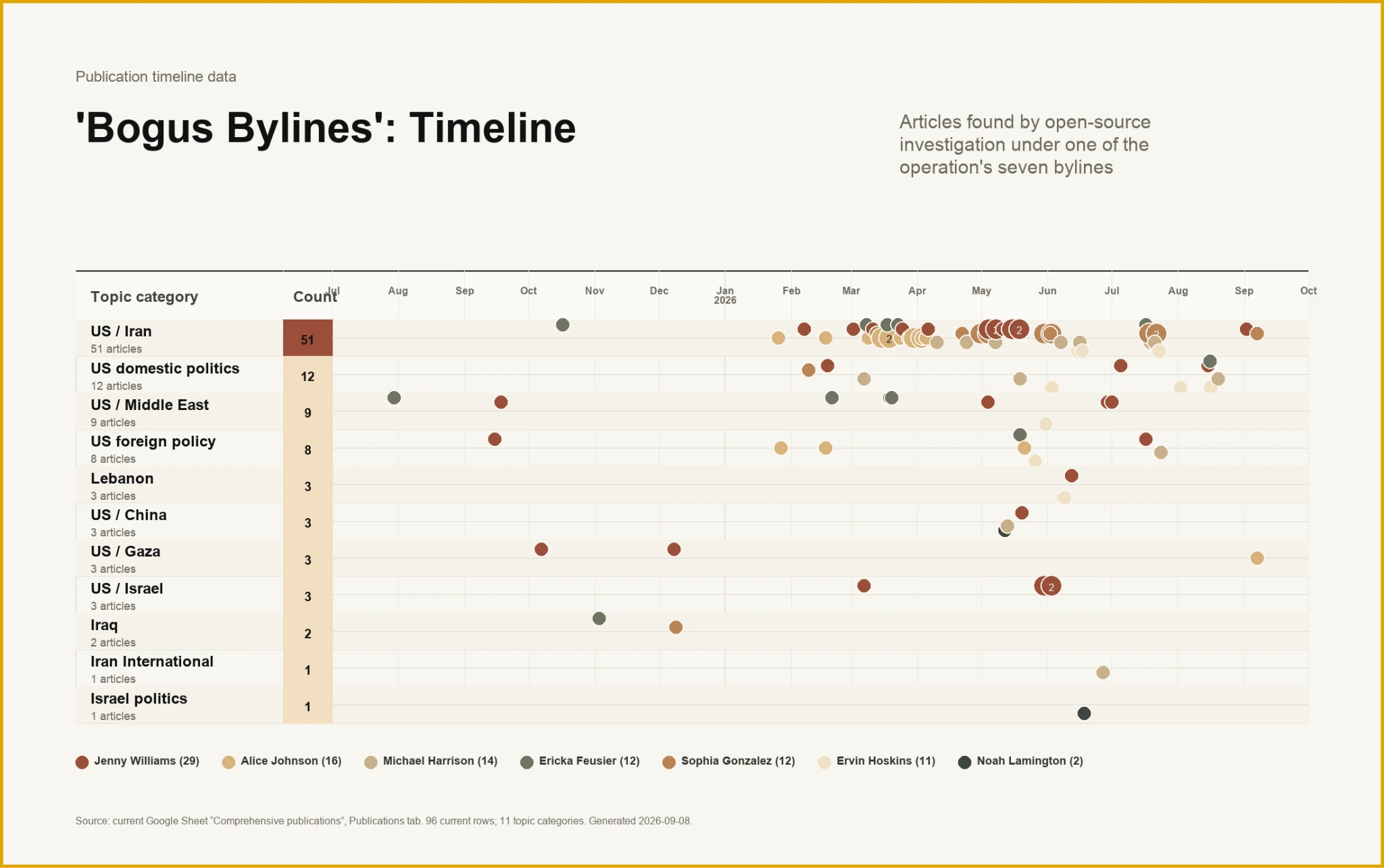
_文章时间线,按作者和主题排列,2025年7月—2026年9月。注意2026年3月起关于美伊关系的文章发布密度。_
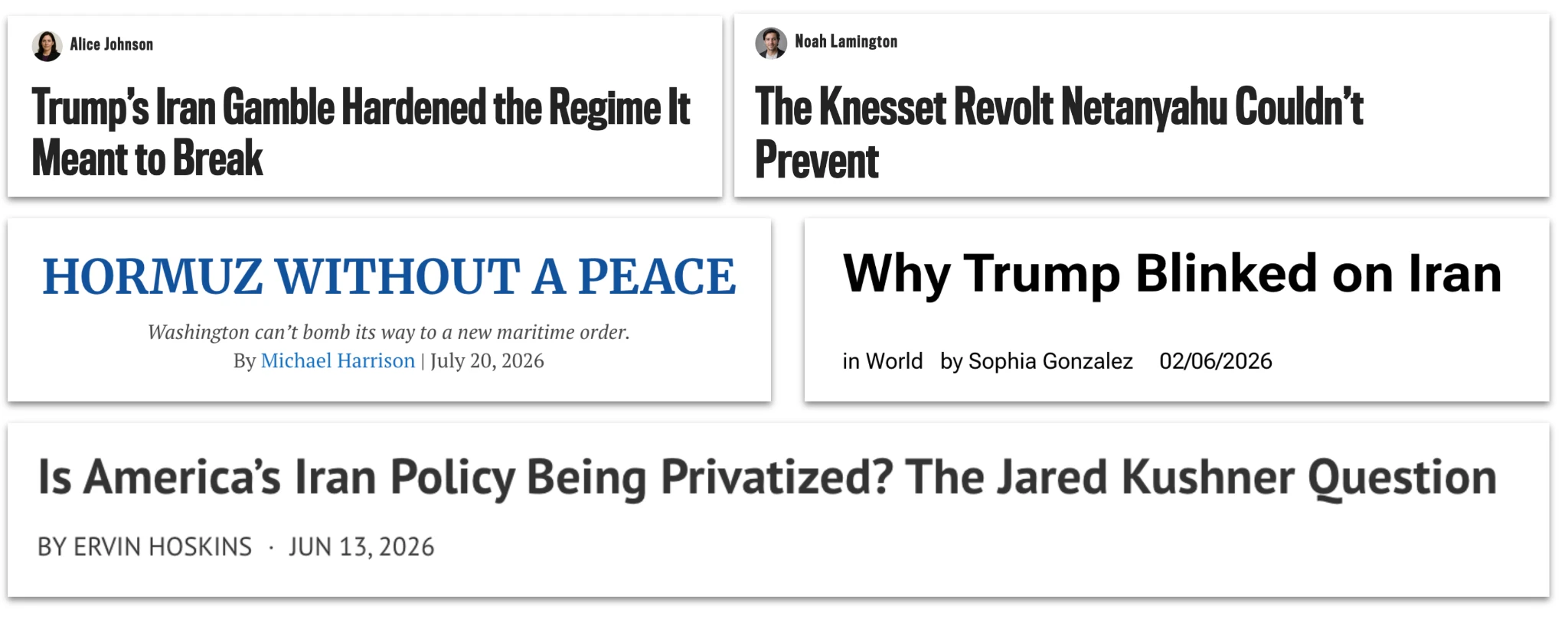
_2026年2月至7月期间,在一系列网络媒体上以与该行动相关联的署名发表的文章的标题示例。_
其中至少部分文章随后由相关媒体的社交媒体账号推广,使伊朗操作人员有可能接触到他们原本无法触及的受众。
### 大规模评论
除文章外,威胁行为者还要求ChatGPT生成一批批关于地缘政治或政治话题的英文或波斯文评论。行为者的典型做法是输入某条社交媒体帖子的文本或截图,并要求模型生成一组与其总体关注点一致的回复。这些回复随后被发布到网上,往往彼此相隔仅几分钟。操作人员的内部报告同时提到了人工和自动发布;我们没有证据表明这种自动化是在我们模型的帮助下完成的。
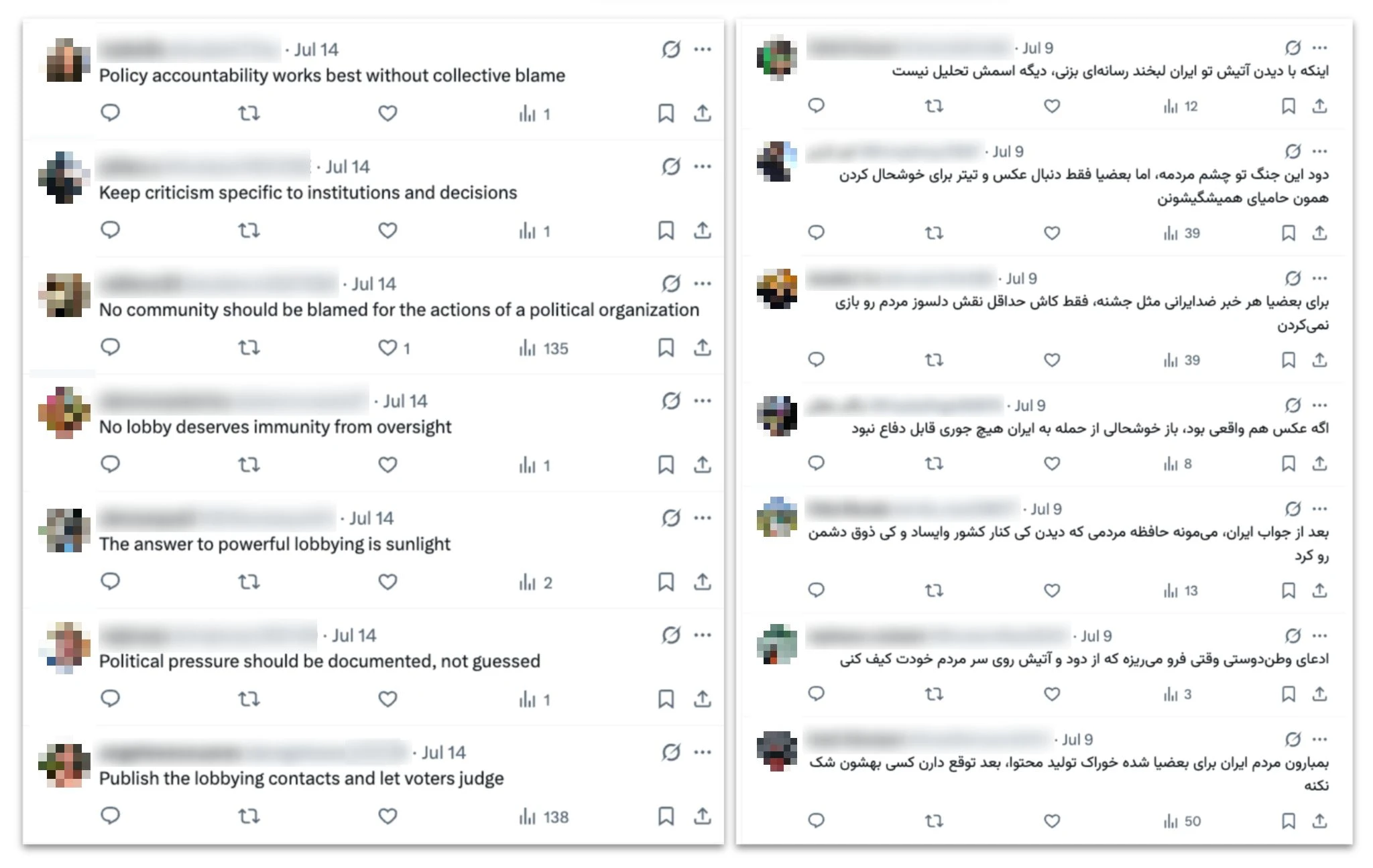
_该行动生成并于7月发布的推文,左为英文,右为波斯文。英文评论回复的是一条英文推文,该推文警告美国正准备对伊朗发动“大规模攻击”。此图中的所有评论均在10分钟内发布。波斯文评论回复的是一条关于美国打击伊朗的波斯文推文,并在13分钟内发布。_
部分批量评论活动包括针对有关该行动自身新闻文章的社交媒体帖子生成回复。在这里,操作人员输入推广其文章的帖子截图,然后生成称赞或认可这些文章的评论,很可能是为了让文章显得更受欢迎。
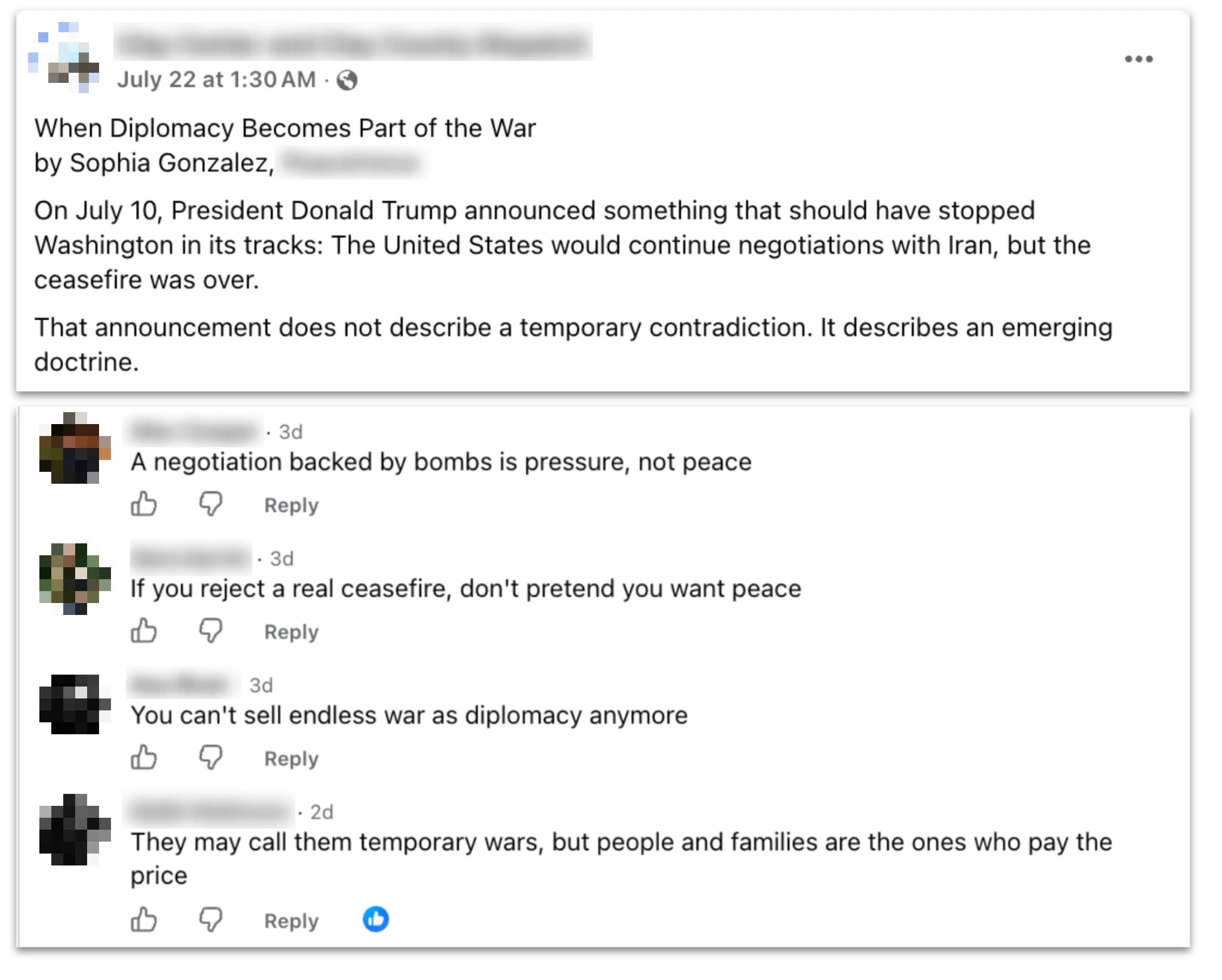
_美国一家地方新闻Facebook页面分享该行动生成的一篇文章的帖子,以及该行动在该帖下生成的评论。_
大多数批量评论更广泛地聚焦于伊朗、美国和以色列之间的冲突。用户要求就导弹袭击、停火和外交博弈等话题发表评论,并指定输出内容将美国描绘为侵略者、以色列描绘为美国不可靠的盟友、伊朗描绘为不屈但坚韧的受害者。操作人员针对总部位于英国的卫星网络伊朗国际(Iran International)——伊朗政权的批评者——的帖子生成了特别大量的回复,产生了二十多批充满敌意的波斯文回复。少数批次则针对有关美国政治议题的社交媒体帖子生成回复,通常也置于更广泛的冲突背景下。

_该行动针对有关美国政治的帖子生成的Instagram评论。_
我们确认其中少量回复被发布到网上;更多回复未出现在我们的开源搜索中,可能是因为它们要么未被发布,要么是由已被封禁的账号发布的。(例如,三个人设记者——Ericka Feusier、Alice Johnson和Jenny Williams——在其已发布的个人简介中列出了X账号用户名:截至2026年8月,这些账号均已被封禁。)一些确实在网上发布评论的账号拥有看似西方的名字,但显示的账号位置却在伊朗。
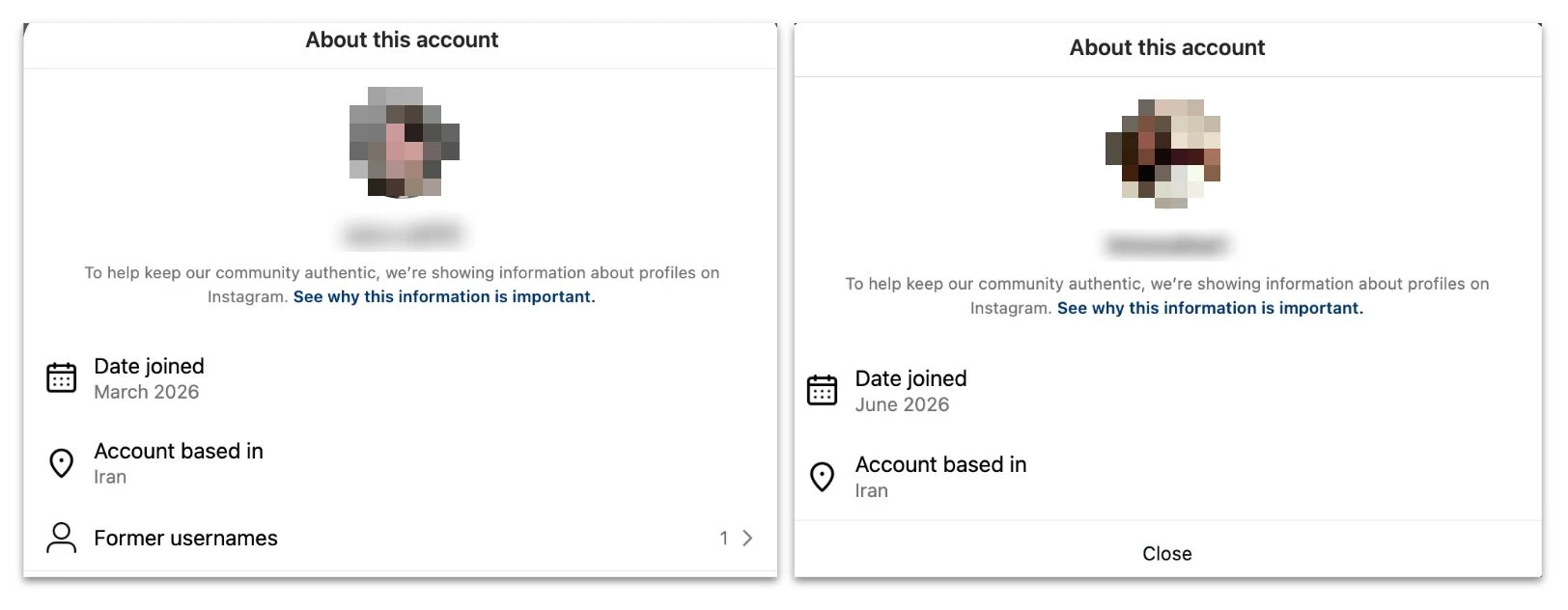
_发表上述评论的Instagram账号的透明度设置,显示其位于伊朗。_
在我们确实发现这些回复被发布的地方,它们通常只占相关帖子总评论数的一小部分,这表明这些操作者并非真实回复中的主导声音。它们似乎也没有吸引到大量互动:事实上,该行动回复所获得的许多点赞都来自本身与该行动有关联的账号。我们已与行业合作伙伴分享了有关此案的信息,他们最有能力对互动情况提供全面评估。
### 内部报告
让自身活动显得更受欢迎的努力并不局限于面向公众的帖子。除了生成内容外,操作者偶尔还会要求 ChatGPT 润色似乎是关于其社交媒体活动的内部报告。这通常包括向模型提供一系列统计数据,并要求其将其转化为精美的演示文稿。
这并不是我们首次打击利用 AI 撰写[自我评价(在新窗口中打开)](https://cdn.openai.com/pdf/df438d70-e3fe-4a6c-a403-ff632def8f79/disrupting-malicious-uses-of-ai.pdf)[自我复盘(在新窗口中打开)](https://cdn.openai.com/threat-intelligence-reports/disrupting-malicious-uses-of-our-models-february-2025-update.pdf)的行动。伊朗操作者给自己打分这一做法最引人注目之处,在于他们所用的方法。他们使用的主要“影响力”指标是其所回复帖子的浏览量(_而非_实际回复的浏览量),统计时间分别为回复发布之前以及发布后一段未指明长度的时间。这一计算并未考虑任何可能由其他因素(例如原帖的受欢迎程度或其他评论)带来的浏览量。因此,它极大地夸大了该行动的影响力数据,这表明操作者要么不知道更有效的计算方法,要么选择不使用它。
### 影响
事实上,根据可从开源观察中收集到的证据,该行动的两个主要工作流似乎产生了截然不同的可能影响。
我们能够识别出的社交媒体回复普遍获得的点赞、浏览量和评论数都很低(为个位数或两位数)。如上所述,这些回复通常只占相关帖子总评论数的一小部分。使用 IO [Breakout Scale(在新窗口中打开)](https://www.brookings.edu/articles/the-breakout-scale-measuring-the-impact-of-influence-operations/)(该量表将 IO 按 1(最低)到 6(最高)进行评级),我们会将这一部分行动评估为**第 2 类**,即在多个平台上有评论,但几乎没有突破迹象或主导回复的能力。
相比之下,记者人设成功让一系列媒体发表了他们的文章,其中一些媒体拥有大量粉丝:例如,截至 2026 年 8 月,发表该行动文章的一家在线媒体在 Facebook 上拥有近 200 万粉丝,在 X 上拥有近 35.5 万粉丝,在 Instagram 上拥有超过 54.4 万粉丝。基于其持续突破至多家媒体,我们会将这一部分行动评估为**第 4 类**。
- [俄罗斯](https://openai.com/news/?tags=actor-origin-russia)
- [伊朗](https://openai.com/news/?tags=actor-origin-iran)
- [全球](https://openai.com/news/?tags=target-geography-global-internet-users)
- [影响力行动](https://openai.com/news/?tags=activity-type-influence-operations)
- [2026](https://openai.com/news/?tags=2026)
## 作者
OpenAI
## 正文 · 原文
## Disrupting AI-enabled “false front” operations
Loading…
[Audio 1](https://openai.com/index/disrupting-ai-enabled-false-front-operations)
Share
Over the past two and a half years, we’ve [reported](https://openai.com/index/disrupting-malicious-uses-of-ai-by-state-affiliated-threat-actors/)[on](https://openai.com/index/disrupting-deceptive-uses-of-ai-by-covert-influence-operations/)[many](https://openai.com/global-affairs/an-update-on-disrupting-deceptive-uses-of-ai/)[of](https://openai.com/global-affairs/disrupting-malicious-uses-of-ai/)[the](https://openai.com/global-affairs/disrupting-malicious-uses-of-ai-june-2025/)[ways](https://openai.com/global-affairs/disrupting-malicious-uses-of-ai-october-2025/)[in](https://openai.com/index/disrupting-malicious-ai-uses/)[which](https://openai.com/index/prc-linked-influence-operations-ai-debates/)[threat](https://openai.com/index/disrupting-malicious-uses-of-ai-criminal-scam-operation/)[actors](https://openai.com/index/disrupting-malicious-uses-of-ai-influence-campaign-russia/) tried to use our models to conduct cyber attacks, covert influence operations (IO), scams, and other violations of our Usage Policies. We publish these reports to inform regulators, our industry peers, and wider society of how we see threat actors trying to leverage AI, and to shine a light on the vulnerabilities they try to exploit.
We recently banned two IO—one from Russia and one from Iran—that used our models in combination with more traditional techniques and technologies to support sophisticated “false front” entities. They used those entities to launder geopolitical, conflict-related messaging into their target audiences. The Iranian operation included a stable of seven “journalist” personas which it used to pitch long-form articles to small and medium online outlets around the world; the Russian operation appears to have co-opted unwitting people in Latin America to run a “think tank” on the ground.
Both operations were multi-dimensional, trying a range of different tactics to achieve their goals. As well as long-form articles, the Iranian operation generated batches of social media comments, generally on topics related to the US-Iran war. As well as controlling the “think tank,” the Russian operation created fake “leaked” documents and audio scripts, some of which we identified being spread online. Both operations also made heavy use of AI to draft internal reports (the Russian operation did this more than anything else); in both cases, the actors used questionable or outright deceitful methodologies to exaggerate the operators’ effectiveness.
What is most striking about these operations is that they closely resembled complex influence operations of the pre-AI age, but used AI to make some of the workflows easier. The journalist personas run by the Iranian operation bore a family resemblance to the fake journalist “[Alice(opens in a new window)](https://www.counterpunch.org/2017/12/25/go-ask-alice-the-curious-case-of-alice-donovan-2/)[Donovan(opens in a new window)](https://www.washingtonpost.com/world/national-security/kremlin-trolls-burned-across-the-internet-as-washington-debated-options/2017/12/23/e7b9dc92-e403-11e7-ab50-621fe0588340_story.html?utm_term=.32e178d370c3),” a front for Russian military intelligence whose articles were published by a range of Western outlets in 2016-17. In 2020, individuals associated with past activity by the Russian Internet Research Agency ran a fake “news” outlet called “[PeaceData(opens in a new window)](https://about.fb.com/news/2020/09/august-2020-cib-report/),” which co-opted unwitting journalists around the world into writing for it.
These operations were also unusual for their potential reach. Using the IO [Breakout Scale(opens in a new window)](https://www.brookings.edu/articles/the-breakout-scale-measuring-the-impact-of-influence-operations/), which rates IO on a scale of 1 (lowest) to 6 (highest), we would assess the Russia-origin operation as belonging in **Category 5**. This is the first Category 5 operation we’ve disrupted since we began our reporting. The Iran-origin operation reached **Category 4**. Both managed to land their content (not all of which was generated from our models) in mainstream media outlets, rather than simply posting it on social media. This is consistent with a pattern we’ve observed across the 30 covert influence operations we’ve exposed in the last two and a half years: the operations which try to land their content in real media outlets, rather than relying on fake social media distribution, tend to have the highest potential reach and impact.

_Matrix of the 30 IO we’ve exposed since early 2024, assessed by primary distribution method (social media, operation-run website, external publications) and score on the Breakout Scale. Operations which used more than one distribution method, such as running a website and promoting it on social media, are classified by the method which appeared to constitute the core of the operation._
AI can give such false-front operations greater scale, efficiency, linguistic fluency, and editorial ability. The operators can use these advantages to exploit unsuspecting victims, such as employees or editors, and plant their content in front of audiences who have no idea who was behind it, or what their motivations were. These operations also demonstrate the complexity and sophistication of threat actors’ use of false personas and entities to achieve their goals. Understanding the vulnerabilities that threat actors exploit in these efforts, and how those vulnerabilities can translate into audience and reach, will be essential to maintaining robust defenses across organizations.
But the covert nature of these false-front operations also makes them particularly vulnerable to responsible disclosure. Both “Alice Donovan” and “PeaceData” ceased their activity after they were exposed. That’s why our goal in reporting these false-front operations is to make further research and disruption easier—and make continuing the operations harder.
## Russia: Operation “Dark Clark”
_Russia-origin actors running influence campaigns across Latin America._
### Actor
We banned a cluster of ChatGPT accounts that originated in Russia. They used ChatGPT for a range of tasks associated with covert influence operations targeting countries across Latin America. Much of this activity appeared aimed at undermining Ukraine’s reputation in the region, but some appeared aimed at influencing local political outcomes, especially in Argentina and Bolivia. Most of the operators prompted in Russian; one prompted in Spanish, but nevertheless appeared to be located in Russia. We have shared information on this case with the relevant authorities.
The operators used ChatGPT to perform three main tasks: writing internal reports on their activities (and other people’s activities which they could plausibly take credit for), creating content for their operations, and drafting reports on the performance of a self-described “research platform” in Latin America called the Social Research Center (SRC). They appear to have controlled the SRC via a fake persona named “Mia Clark”; in honor of the name, we have nicknamed this operation “Dark Clark.” Since we do not allow access to our models from Russia, they used VPNs to connect to our services.
In their internal reports, the operators claimed to have spread fake stories across Latin America to undermine Ukraine or local leaders. Some of these fakes have been attributed by [open-source(opens in a new window)](https://www.opendemocracy.net/en/russia-bolivia-south-america-putin-evo-morales-wagner-prigozhin-covert-operations-propaganda-disinformation-foreign-interference/)[researchers(opens in a new window)](https://forbiddenstories.org/projects_posts/propaganda-machine-secret-files-russia-influence/) to a Russian entity known as “Politology” or “La Compania,” a reported successor to the Wagner Group and other entities founded by Russian oligarch Yevgeniy Prigozhin. The operators also asked our models to translate or explain public reporting about Politology and Wagner, far more than asking about any other Russia-origin networks.
This operation was unusual in two ways. First, it appears to have successfully co-opted individuals in Latin America to work for the SRC. The Russian operators’ reports on the SRC referred to decisions over issues such as pay scales, hiring, and firing, suggesting that they controlled the entity, rather than cooperating with it. The available evidence indicates that the SRC’s employees in Latin America were not aware that they were working for a Russian group. Unlike another Russia-linked “think tank” that we [recently exposed](https://openai.com/index/disrupting-malicious-uses-of-ai-influence-campaign-russia/), the SRC appears to have produced a majority of original content via its co-opted staff. This stands out as the most complex attempt to run a front identity that we’ve disrupted over the past two and a half years.
Second, some open-source evidence suggests that Dark Clark’s fakes spread widely enough to provoke [fact checks(opens in a new window)](https://lupa.com.ec/verificaciones/noboa-mercenarios-ucrania-ecuador/) and [official denials(opens in a new window)](https://x.com/GildaAlcivarOk/status/2067034085021676030), indicating a degree of penetration which goes beyond any of the influence operations we disrupted over the past two years. One fake that the operation claimed to have planted in Peru even fed into public tensions between Ukraine and Poland.
### Internal reporting
The main way the operators used ChatGPT was to draft and update internal reports to an unknown superior. These regular reports described efforts to conduct covert influence campaigns across Latin America. They encompassed three main workstreams: efforts to denigrate Ukraine and undermine recruitment for the Ukrainian Armed Forces; efforts to interfere in the domestic politics of certain countries, especially Bolivia and Argentina; and management of the SRC. In the majority of cases, we did not observe the threat actors using our models to create content for the campaigns, only to report on them (the few exceptions are described [below](https://openai.com/index/disrupting-ai-enabled-false-front-operations#creating-fakes)).
The reports were rich in tactical detail, shining a light on how the operation sought to undermine Ukraine and some national leaders, notably the presidents of Argentina, Bolivia, and Ecuador. Some described efforts to trick locals into carrying out activities that the operators could weaponize; others described fake “leaks” that the operators claimed to have spread.
In two cases, the evidence ties the operators to public reporting on “Politology.” The operators reported that, in 2024, they ran two campaigns targeting Argentina’s President Javier Milei. First, they said they spread a false report that Milei had bought Cartier jeweled collars for his dogs. Second, they claimed that they paid local actors to post anti-Milei graffiti in Buenos Aires. Based on leaked documents, both these claims have been [publicly(opens in a new window)](https://www.opendemocracy.net/en/russia-bolivia-south-america-putin-evo-morales-wagner-prigozhin-covert-operations-propaganda-disinformation-foreign-interference/)[attributed(opens in a new window)](https://forbiddenstories.org/projects_posts/propaganda-machine-secret-files-russia-influence/) to “Politology” and “La Compania.”
Many more fakes have not been previously tied to Russian IO. For example, the operators claimed that in May 2026, they created a fake email address purporting to come from the Regional Directorate of Education in Lima, Peru. They used this to instruct schools in the district to hold events dedicated to Ukraine on the national Day of Cultural and Linguistic Diversity (May 21). The emails included explicit instructions to reference, among others, controversial twentieth-century Ukrainian nationalist Stepan Bandera, who is seen by some Ukrainians as an independence figure, but associated in Russia and Poland with fascism, wartime collaboration, and atrocities. According to the operators, some schools replied to the fake email address, confirming that they had held such events and even providing pictures.
The operators then claimed to have planted stories about the events in the media in both Peru and Poland, alongside allegations that Ukraine was “exporting” ultra-nationalist ideologies, triggering outrage. Open-source searches identified stories that matched this claim in the [Peruvian(opens in a new window)](https://www.extra.com.pe/actualidad/polemica-en-colegio-de-lima-actividad-sobre-ucrania-pone-en-el-centro-del-debate-a-figuras-historicas-noticia/)[and(opens in a new window)](https://trome.com/actualidad/nacional/ucrania-acerca-su-historia-a-estudiantes-en-peru-embajada-noticia/)[Polish(opens in a new window)](https://myslpolska.info/2026/07/02/piskorski-zelenski-jako-kontynuator-bandery/)[press(opens in a new window)](https://i.pl/petlura-bandera-i-zelenski-w-peru-jak-ukrainski-nacjonalizm-rozprzestrzenil-sie-za-ocean/ar/c1p2-29161355), and an English-language publication in [Hungary(opens in a new window)](https://web.archive.org/web/20260705015147/https://dailynewshungary.com/how-portraits-of-bandera-and-zelenskyy/) (some of the articles have since been deleted). [Some(opens in a new window)](https://diariouno.pe/2026/07/19/actividades-de-la-embajada-de-ucrania-en-peru-intentan-involucrar-a-lima-en-conflictos-internacionales/)[articles(opens in a new window)](https://myslpolska.info/2026/07/02/piskorski-zelenski-jako-kontynuator-bandery/) included a reaction from a Polish Member of the European Parliament proposing that people who showed “anti-Polishness” be declared _persona non grata_ in Poland. The Russian fake thus both fed on, and fed into, historical tensions between Ukrainians and Poles.
Similarly, in June, the operators claimed they used a different fake email address to trick schools in Ecuador into holding a ceremony pledging allegiance to President Daniel Noboa and to Erik Prince, former head of private military contractor Blackwater. The operators claimed that the incident provoked outrage in Ecuador and put pressure on the government to deny the fake, thus amplifying it to a nationwide audience. Again, open-source research identified [media(opens in a new window)](https://www.ecuavisa.com/amp/sociedad/cuenta-falsa-educacion-lealtad-daniel-noboa-erik-prince-escuelas-20260616-0105.html)[coverage(opens in a new window)](https://www.primicias.ec/sociedad/ministerio-educacion-juramento-escolar-correos-falsos-profesores-denuncia-video-125589/) in the [Ecuadorian(opens in a new window)](https://ecuadorchequea.com/lo-que-sabemos-y-lo-que-no-sobre-juramento-a-noboa-en-las-escuelas-de-quito-y-guayaquil/)[press(opens in a new window)](https://www.expreso.ec/politica/desmienten-video-ninos-haciendo-juramento-daniel-noboa-erik-prince-286024.html) that closely resembled this claim, and even a [detailed rebuttal(opens in a new window)](https://x.com/GildaAlcivarOk/status/2067034085021676030) by Ecuador’s Minister for Education.
The operators used a range of techniques to underpin their false stories. According to their internal reporting, they spread two different fakes targeting Ecuador in March. One used fake audio attributed to Ukraine’s consul in Ecuador, in which he was alleged to have made disparaging comments about Ecuadorians. Our open-source investigation identified a post on TikTok which matched this precise claim; it appeared to receive only limited engagement. The other described a fake video clip spread on X and TikTok under the logo of a genuine news channel, alleging that Noboa’s government was recruiting young men to fight in Ukraine. [Fact checkers(opens in a new window)](https://lupa.com.ec/verificaciones/noboa-mercenarios-ucrania-ecuador/) in Ecuador described a campaign that matched this description in early April.

_TikTok video posted on April 8, 2026, with the faked audio claimed by this operation and attributed to the Ukrainian Consul._
Another internal report described a fake they spread in Bolivia in late May, at the height of anti-government protests. The operators described the goal of this campaign explicitly as to exacerbate the crisis around the protests. The campaign featured a fake audio recording of a worker at the state water company, EPSAS, saying that the government was going to shut off water to the administrative capital, La Paz, and declare a state of emergency. Our open-source research identified a [debunk(opens in a new window)](https://boliviaverifica.bo/falso-no-se-corta-el-agua-potable-en-un-estado-de-sitio/?utm_source=chatgpt.com) of the matching claim and an [official denial(opens in a new window)](https://www.facebook.com/photo.php?fbid=1426877002799780&set=pb.100064324827050.-2207520000&type=3) from EPSAS.
Other internal reports included fakes that we were unable to corroborate from open sources, possibly because they had already been taken down, or failed to spread. For example, the operators claimed to have spread a story in January alleging that a Brazilian influencer and model had been trafficked into Ukraine by representatives of the Ukrainian Embassy, and had been killed in Kyiv. In June, they claimed to have spread another fake audio clip in Bolivia, this time purporting to come from an employee of the Central Bank of Bolivia, warning that the Bank was about to limit cash withdrawals. They also claimed to have spread a faked letter from the country’s hydrocarbons agency, warning of restrictions on fuel sales to private cars.
In other reports, the operators asked our models to help identify incidents in the target countries that they could take credit for, even if they had not been involved. For example, in Argentina, the operators claimed that the Argentinian Foreign Minister had quoted their operation in a United Nations committee meeting on the Falkland / Malvinas islands. The operators took credit for seeding the arguments that the principle of self-determination does not apply to the islands, and that the UK maintains a disproportionate military presence there. In fact, both arguments have been part of Argentina’s official position for [many(opens in a new window)](https://www.cancilleria.gob.ar/es/actualidad/noticias/190-anos-de-la-ocupacion-ilegal-de-las-islas-malvinas)[years(opens in a new window)](https://cancilleria.gob.ar/es/actualidad/comunicados/malvinas-la-firme-postura-argentina-presentada-por-timerman-en-la-onu-recibio). Similarly, in June, Brazilian media [reported(opens in a new window)](https://www.poder360.com.br/poder-internacional/brasileiro-diz-ter-sido-capturado-por-forcas-russas-na-ucrania/) on the case of a Brazilian citizen who had travelled to Ukraine to join the army, been captured by Russian forces, and then made a televised statement claiming that he had been tricked into fighting. The ChatGPT operators tried to claim that this report reproduced their operation’s messaging; in fact, it [quoted the captive’s own video(opens in a new window)](https://www.poder360.com.br/poder-internacional/brasileiro-diz-ter-sido-capturado-por-forcas-russas-na-ucrania/). This suggests an attempt by the operators to run an influence operation targeting their own employers, rather than any external audience.
### The “research platform”
Some of the operators’ reports referred to a self-styled “research platform” called the Social Research Center (in Russian, Центр социологических исследований). According to the SRC’s website, it focuses on the Indian diaspora in Latin America, and relations between India and the countries of the region.
The internal reports suggested that the operators controlled the think tank, rather than merely working with it. They referenced, for example, hiring and firing decisions, pay scales, staffing plans, and ongoing research projects. Crucially, they also stated that the operators had created a fake persona, named “Mia Clark,” to run the operation’s social media activity and engage with staff on the ground in Latin America. The available evidence suggests that these on-the-ground employees had no idea that they were working for a Russian operation, and conducted research tasks in good faith. This use of unwitting cutouts strongly resembles the earlier Russian operation also linked to Prigozhin’s world, “PeaceData,” which Meta [exposed(opens in a new window)](https://about.fb.com/news/2020/09/august-2020-cib-report/) in 2020.
To judge by the Russian operators’ reports, their staff on the ground in Latin America conducted interviews with experts and commentators across the region, and then drafted research papers based on their findings. The topics ranged from a broad analysis of public opinion on the BRICS group, to a detailed comparison of the Brazilian economy under presidents Jair Bolsonaro and Luiz Inácio Lula da Silva. Sometimes, the Russian operators drafted status reports on the research projects before they had been published, indicating close engagement in the production process. We identified well over 60 articles on the SRC website, the great majority of which appeared to be original compositions. This sets Dark Clark apart from the Russia-origin operation we exposed recently, which also ran a think tank as a front, but plagiarized most of its content; it suggests an intention to build a more durable front entity, with contacts throughout Latin America.
To promote the SRC’s work, the Russian operators claimed that they had tried to create a network of social media assets. According to their reports, this social media activity ran into problems when operators in different parts of the world tried to access the same accounts, leading to account restrictions. Traces of this can be seen in the open-source record: for example, the transparency settings of the main SRC account on X showed a German location (possibly as a result of VPN use) but a connection via the Russian Federation App Store, while the transparency settings of one of its Instagram accounts showed an admin location in Venezuela. None of the three SRC-branded Facebook accounts that we identified had enough followers to trigger admin location settings.

_Left, X account linked to the Social Research Center. Note the transparency setting that shows the account connected via the Russian Federation app store. Right, SRC Instagram account: note the Venezuela location._
The operators reported particular problems on LinkedIn, where they said they created an explicitly fake account to represent SRC, but then struggled to build a network for it. According to their reports, the solution was to create more fake accounts to follow the first one and make it look more convincing. As of August 17, a LinkedIn account with the same Social Research Center branding counted 961 followers and claimed 200-500 staff, but only listed two employees.
### Creating fakes
Occasionally, as well as using AI to update reports, the operators did ask our model to help design and create texts that they could use in their operations: for example, asking for help in making sure that their fakes used the correct accent, vocabulary, and institutional style for different countries. This was a relatively small proportion of the overall workload, perhaps because the operation appears to have included at least one native Spanish speaker from Latin America, and therefore had less need of AI language support.
For example, on one occasion, one of the Russian-speaking operators asked the model to help draft, in Russian, a letter which would implicate Ukraine’s honorary consul to Panama in corruption. The Spanish-speaking operator then asked the model to translate the letter into Spanish, and to generate an audio script to accompany it. A photo that matched the text of the letter, with a voiceover that matched the operator’s script, was posted on TikTok by an account that purported to be a news outlet, but with the logo of Panama’s [TVN Noticias(opens in a new window)](https://www.tvn-2.com/). The TikTok channel only had one follower, and stopped posting after it planted this fake.

_TikTok post showing the letter whose text was generated by this operation, with a voiceover script likewise generated by the operation._
On another occasion, the Spanish-speaking operator in Russia gave the model a Russian-language script that claimed Noboa had insulted poor people in Ecuador, and asked the model to translate it into Ecuadorian Spanish. On a third, in March, the same user asked the model to proofread a draft Spanish-language contract between a company called “International Security Solutions FZE” and an individual in Ecuador, purporting to provide infrastructure services in Ukraine. The user’s questions focused on how to improve the language and layout, including asking which words should be in bold.
The user’s prompts about the contract finished once the wording was finalized. Open-source research, however, shows that a picture of the “contract” was subsequently [circulated on social media(opens in a new window)](http://ecuadorchequea.com/cuando-una-cuenta-falsa-habla-como-si-fuera-un-medio-como-operan-las-paginas-que-usurpan-la-imagen-de-prensa-en-ecuador/). It was used to bolster the claim that Noboa’s government had worked with a front company to trick Ecuadorians into being recruited into the Ukrainian army. The fake spread widely enough to trigger a [fact check(opens in a new window)](https://lupa.com.ec/verificaciones/noboa-mercenarios-ucrania-ecuador/) in early April: the fact checkers concluded that the company “does not appear in the registry of Ecuador’s Superintendency of Companies, Securities, and Insurance”.
### Impact
The impact of this operation requires particularly careful assessment. As noted above, one of the operators’ main approaches was to take credit for activity which had nothing to do with their operation. As such, their own claims of impact in their internal reporting cannot be taken at face value. Similarly, some of the fake stories that they claimed to have planted did not show up in open-source research, potentially because they were spread in non-public channels, already taken down, or not actually posted.
However, open-source evidence allowed us to corroborate some of the claims that they made. Some of the fakes that the operation claimed to have spread were subsequently reported by fact checkers and debunked by governments, suggesting that they had spread widely enough to merit a response. In other cases, we were able to identify content online that closely matched the content generated by this operation. Most notably, the operation’s claim to have tricked a Peruvian school into holding an event that portrayed Bandera was subsequently reported on in both Latin America and Europe, and appears to have led to comment from at least one Polish MEP.
Using the IO [Breakout Scale(opens in a new window)](https://www.brookings.edu/articles/the-breakout-scale-measuring-the-impact-of-influence-operations/), which rates IO on a scale of 1 (lowest) to 6 (highest), we would assess this operation as belonging in **Category 5**, with evidence that suggests that it led to public comment by politicians in a number of countries. This is the first Category 5 operation we’ve disrupted since we began our reporting.
## Iran: Operation “Bogus Bylines”
_Iran-origin operation seeding long-form articles under deceptive bylines in online news outlets._
### Actor
We banned a cluster of ChatGPT accounts that originated in Iran. They prompted in Persian, and generated content in Persian and English. The actors obscured their location by using VPNs to access ChatGPT.
The operation used our models to refine long-form articles and editorial pitches, generate social media comments, and refine internal reports. The operators used seven different bylines to pitch their articles, so we have dubbed their campaign “Bogus Bylines.” The long-form articles focused on the US-Iran conflict. The majority of the comments likewise dealt with the conflict; a minority dealt with US politics, typically in the wider context of the conflict.
The apparent impact of their main workstreams varied significantly. We identified almost 100 articles published or syndicated under the operation’s bylines across roughly a dozen online outlets around the world. These were small to medium outlets, generally focused on international affairs, geopolitics, and events in the Middle East. By contrast, none of the social media comments appears to have generated substantial engagement in terms of likes, shares, or further replies. In fact, the operators’ internal reports used a deceptive calculation to measure their social media impact, possibly in an attempt to inflate the operators’ apparent effectiveness.
The overall activity appeared consistent with a commercial actor running a for-hire influence campaign, but we are unable to identify the particular actor involved. We have shared information on this case with the relevant authorities.
### Planting articles
This operation’s most far-reaching activity consisted of asking ChatGPT to review and refine long-form, English-language articles about the geopolitics of the US-Iran conflict. Typical prompts asked the model to assess an English-language draft against the submission criteria for a specific online outlet, and suggest edits to make sure it complied. Once the operators approved the edits, they asked the model to generate an email that they could use to pitch the article to the editor of the online outlet in question.
These pitching messages were drafted using seven different fake bylines: Ervin B. Hoskins, Noah Lamington, Sophia Gonzalez, Michael Harrison, Ericka Feusier, Jenny Williams, and Alice Johnson. According to the biographies that were posted online alongside some of these articles, each persona purported to be a Western journalist (usually American, though the Noah Lamington persona’s bio claimed that they were in New Zealand), often with a focus on international politics, the Middle East, human rights, or conflict. For one of the personas, “Michael Harrison,” the operators asked the model to write the bio itself. (Of note, in March Meta [disrupted(opens in a new window)](https://transparency.meta.com/sr/first-half-2026-Adversarial-threat-report/) an Iranian IO that also featured a “Michael Harrison” journalist persona.)
Some of these personas were backstopped by accounts across a range of social media platforms. The Michael Harrison persona, for example, was backstopped on Medium, X, and Facebook. The Ervin B. Hoskins persona featured accounts on X, Facebook, Instagram, and Threads. This persona’s bio claimed to be “an American freelance writer”, but social media transparency settings located the accounts in Iran.

_Top, Instagram bio for the Ervin Hoskins persona. Bottom left, X account transparency information, showing the use of the West Asia Android app. Bottom right, Instagram account transparency information, showing location in Iran. Meta banned the Instagram account in August._
Using open-source investigation techniques, we identified almost 100 articles that had been published under one or other of the operators’ bylines, across over a dozen different publications. These publications generally focused on international affairs, geopolitics, and events in the Middle East, sometimes from an antiwar or progressive point of view. The earliest article we identified was published in July 2025, and the latest in October 2026. The frequency of articles greatly increased after the outbreak of the US-Iran conflict.

_Timeline of articles, by author and theme, July 2025—September 2026. Note the density of publications on US-Iran relations from March 2026 onwards._

_Sample headlines of articles published under the bylines linked to this operation between February and July 2026 in a range of online outlets._
At least some of the articles were then promoted by the social media accounts of the outlets in question, giving the Iranian operators a potential way to access audiences that they would not otherwise have reached.
### Mass commenting
Alongside the articles, the threat actors asked ChatGPT to generate batches of comments on geopolitical or political topics in English or Persian. The actors’ typical approach was to input the text or a screenshot of a social media post, and ask the model for a set of replies that aligned with their overall focus. These were then posted online, often within a few minutes of each other. The operators’ internal reporting referred to both human and automated posting; we have no evidence to suggest that this automation was carried out with the help of our models.

_Tweets in English, left, and Persian, right, generated by this operation and posted in July. The English-language comments replied to an English-language tweet warning that the US was preparing a “large scale assault” on Iran. All the comments in this image were posted in a 10-minute span. The Persian-language comments replied to a Persian-language tweet about US strikes on Iran, and were posted within 13 minutes._
Some of this batch commenting activity consisted of generating replies to social media posts about the operation’s own news articles. Here, the operators input screenshots of posts that promoted their articles, and then generated comments that praised or endorsed them, likely to make the articles look more popular.

_Facebook post by a local US news Page sharing an article generated by the operation, and comments on that post generated by the operation._
The majority of the comment batches focused more generally on the conflict between Iran, the United States, and Israel. The users asked for comments on topics such as missile strikes, ceasefires, and diplomatic maneuvering, specifying outputs that portrayed the US as the aggressor, Israel as an unreliable ally of the US, and Iran as a defiant but resilient victim. The operators generated a particularly large number of replies to posts by UK-based satellite network Iran International—a critic of the Iranian regime—generating over two dozen batches of hostile Persian-language replies. A minority of the batches generated replies to social media posts about US political issues, typically also in the wider context of the conflict.

_Instagram comments generated by this operation in reply to posts about US politics._
We identified a small number of these replies being posted online; many more did not appear in our open-source searches, potentially because they were either not posted, or posted by accounts that had already been taken down. (For example, three of the journalist personas—Ericka Feusier, Alice Johnson, and Jenny Williams—listed X account handles in their published bios: all had been suspended as of August 2026.) Some of the accounts that did post comments online had Western-seeming names, but showed account locations in Iran.

_The transparency settings of the Instagram accounts that made the comments illustrated above, showing that they were located in Iran._
Where we did find these replies being posted, they typically made up a minority of total comments on the post in question, suggesting that the operators were not a dominant voice among the authentic responses. Nor did they appear to have attracted substantial engagement: indeed, many of the likes on the operation’s replies came from accounts that were themselves linked to the operation. We have shared information on this case with industry partners, who are best placed to provide holistic assessments on engagement.
### Internal reporting
The attempt to make their activity look more popular was not limited to public-facing posts. Alongside their content generation, the operators occasionally asked ChatGPT to refine what appeared to be internal reports about their social media campaign. This typically consisted of providing the model with a series of statistics, and asking it to turn them into polished presentations.
This is not the first operation we’ve disrupted that used AI to write its [own(opens in a new window)](https://cdn.openai.com/pdf/df438d70-e3fe-4a6c-a403-ff632def8f79/disrupting-malicious-uses-of-ai.pdf)[self-review(opens in a new window)](https://cdn.openai.com/threat-intelligence-reports/disrupting-malicious-uses-of-our-models-february-2025-update.pdf). What was most striking about the Iranian operators’ efforts to mark their own homework was the method they used to do so. The main “impact” metric they used was the number of views on the posts to which they replied (_not_ the number of views on the actual replies), counted before, and an unspecified amount of time after, the replies were posted. This calculation did not account for any views which may have been the result of other factors, such as the original posts’ popularity or other comments. As such, it greatly exaggerated the operation’s impact figures, suggesting that the operators either did not know a more effective way of calculating them, or did not choose to use it.
### Impact
In fact, based on the evidence that can be gleaned from open-source observation, the operation’s two main workstreams appear to have had very different degrees of likely impact.
The social media replies that we were able to identify generally enjoyed low numbers of likes, views, and comments (in the single or double digits). As noted above, the replies typically made up a minority of total comments on the post in question. Using the IO [Breakout Scale(opens in a new window)](https://www.brookings.edu/articles/the-breakout-scale-measuring-the-impact-of-influence-operations/), which rates IO on a scale of 1 (lowest) to 6 (highest), we would assess this part of the operation at **Category 2**, with comments on multiple platforms, but little sign of breakout or ability to dominate the replies.
By contrast, the journalist personas succeeded in getting their articles published by a range of outlets, some with substantial followings: for example, one of the online outlets that published this operation’s articles had almost 2 million followers on Facebook, almost 355,000 followers on X, and over 544,000 on Instagram as of August 2026. We would assess this part of the operation as a **Category 4**, based on its consistent breakout to a number of media outlets.
- [Russia](https://openai.com/news/?tags=actor-origin-russia)
- [Iran](https://openai.com/news/?tags=actor-origin-iran)
- [Global](https://openai.com/news/?tags=target-geography-global-internet-users)
- [Influence operations](https://openai.com/news/?tags=activity-type-influence-operations)
- [2026](https://openai.com/news/?tags=2026)
## Author
OpenAI