# Anthropic 介绍 Claude Duet 智能体的安全、隐私与凭证隔离设计
> 原标题:Claude Duet Safety, Privacy, and Security
- 来源:Claude:Blog
- 发布时间:2026-10-23T00:00:00.000Z
- AIHOT:https://aihot.news/items/g9tc56izmwy49zgw5ta4ubsya
- 原文:https://claude.com/blog/claude-duet-safety-privacy-and-security
## 摘要
Anthropic 发文介绍处于研究预览阶段的 Claude Duet 智能体的安全与隐私设计。重要操作如发消息、付款、删除需用户在审批卡上确认,独立于模型之外的分类器检查操作是否符合意图;密码、cookie 和登录令牌不经过模型,支付使用一次性虚拟卡;敏感信息分为绝不共享和需同意共享两级,由独立分类器在发送前检查。
## 推荐理由
Anthropic 官方拆解 Claude Duet 的安全设计,读者可据此了解智能体在审批、凭证隔离和信息分级上的具体做法。
## 正文 · 中文译文
[Claude Duet(在新标签页中打开)](https://claude.com/resources/articles/claude-duet) 是一个智能体,目前处于研究预览阶段,它使用基于云的计算机为你完成工作。它可以使用你选择连接到 Claude 的所有应用和服务,并且即使你关闭应用后它也会持续运行。它可以读取你的收件箱、起草回复、预订事项,并在你离开时运行例行任务。我们的团队在自己的账户上运行 Claude Duet,我们每天都用它来工作。
我们基于三项原则构建 Claude Duet,以指导该智能体的行为:
1. 你的信息,以及他人在你连接的应用中分享的内容,都会得到谨慎处理,使用一个新的分类器在 Claude Duet 起草的消息发出前进行检查。
2. 你始终掌控它代表你所做的事情。
3. Claude Duet 永远不会看到你的密码、浏览器 Cookie、登录令牌或其他凭据。
Claude Duet 是新的,但其背后的理念并非如此。2025 年,我们[发布了安全可信智能体框架(在新标签页中打开)](https://www.anthropic.com/news/our-framework-for-developing-safe-and-trustworthy-agents),该框架将人置于控制之中,并将隐私和安全交互视为基本要求。此后,我们撰文阐述了为什么[单一防御并不足够(在新标签页中打开)](https://www.anthropic.com/research/trustworthy-agents),以及为什么[模型内部的保护无法独立存在(在新标签页中打开)](https://www.anthropic.com/engineering/how-we-contain-claude)。我们还通过 [Claude Managed Agents(在新标签页中打开)](https://www.anthropic.com/engineering/managed-agents) 构建并运营企业用于在生产环境中运行智能体的基础设施,Claude Duet 以同样的方式将凭据与智能体分离。它建立在这项工作之上,增加了代表你行动的智能体所需的保护措施。本文介绍了我们新增的内容以及仍在努力的方向。
## 你批准重要操作
一个在你离开时行动的智能体必须知道何时停下来请求许可再继续,并且要以恰当的频率这样做。在 Claude Duet 执行诸如发送可能敏感的消息、付款或删除任何内容之类的操作之前,它会向你显示该操作、目标以及内容,包括每一位收件人。然后它会等待你批准该操作。
每个操作都会同时运行一项独立的自动化检查,该检查基于[Claude Code 的自动模式分类器(在新标签页中打开)](https://www.anthropic.com/engineering/claude-code-auto-mode)并针对 Claude Duet 进行了扩展。它会评估该操作是否符合你的意图。该检查在执行工作的模型之外运行,因此页面中隐藏的指令无法影响结果。
有些操作即使你批准也仍然禁止,例如交易证券、银行操作(如在账户之间转移资金)以及访问他人的账户。还有一些步骤不受“不要再问我”规则覆盖,无论你批准过多少次,例如付款或转账、删除订单或创建账户。在你离开时运行的例行任务也享有同样的保护措施。
我们花了大量时间校准 Claude Duet 请求批准的频率。批准疲劳是一个严重问题,因为过多的请求会让人养成随手点过的习惯,有时并未充分考虑。我们将持续调整这一校准。
对于购买,Claude Duet 使用来自 Stripe 的 Link 等钱包的一次性卡付款,且仅限于该商户和金额。你会看到商品和总额,并在你的 Link 应用中批准购买。你的真实卡号不会与 Claude Duet 或商户共享。
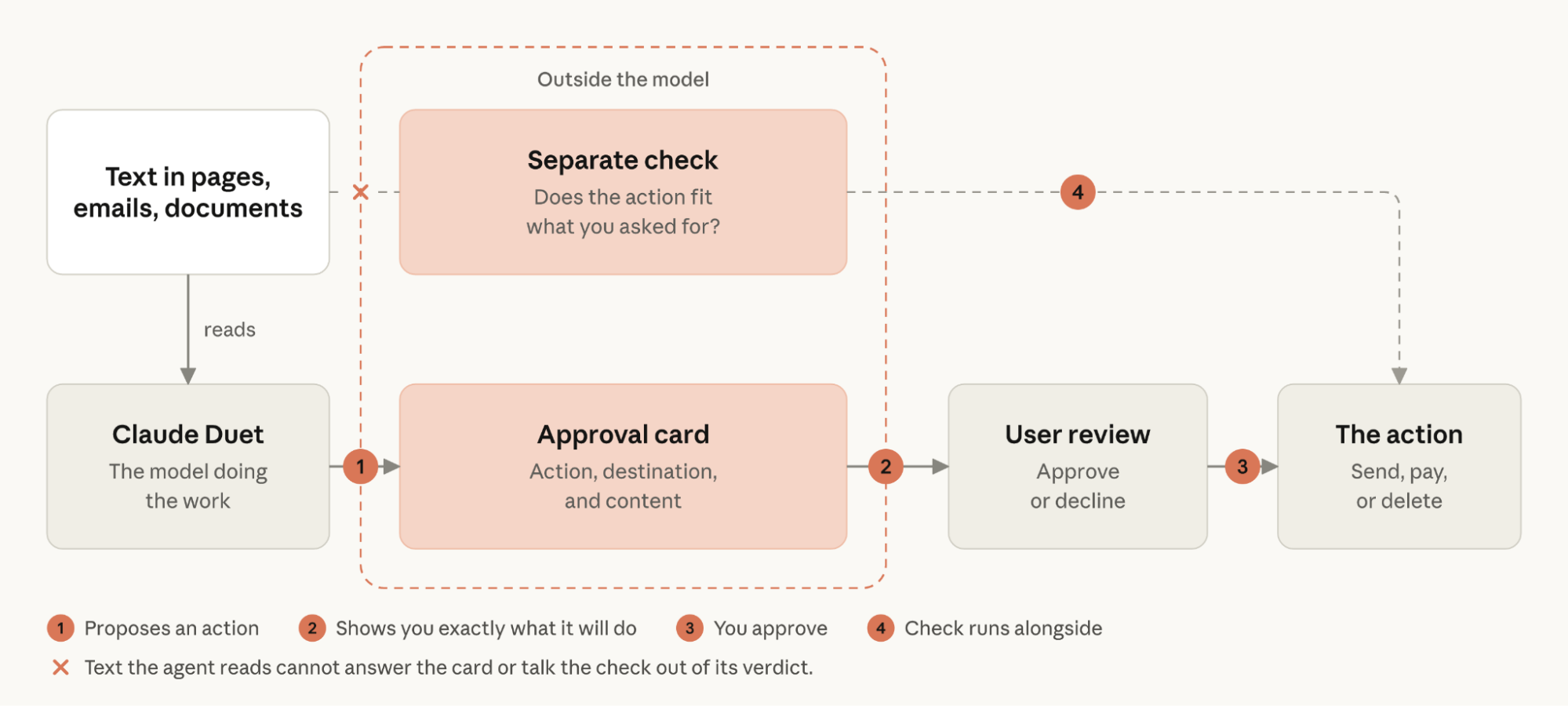
图 1. 审批流程:审批卡片和单独的检查位于模型之外,因此智能体读取的任何内容都无法回答该卡片。
## 您的信息会被谨慎处理
一个读取您的电子邮件并替您发送消息的智能体,会不断判断不同类型的信息应该流向何处。如果您让 Claude Duet 向团队发送每周回顾,它应只包含团队中每个人本就有权访问的内容,绝不包含私人细节,例如您的绩效评估对话。
为解决这一问题,我们构建了一个新的安全分类器,它与主模型分开运行,检查 Claude Duet 即将发送的每条消息是否包含潜在的敏感信息。我们将这些信息分为两个层级:
- **绝不共享:**我们对登录凭据、完整的银行卡号和银行账号以及政府身份证件号码等信息给予最高级别的敏感保护。Claude Duet 被指示绝不与任何人共享这些信息,即使您要求也不行。
- **共享需征得同意:**对于其他私人信息,例如健康或财务信息,只有在您明确批准后,Claude Duet 才会共享。您自己的请求即视为同意,因此“给我的牙医发一条关于我牙痛的说明”通常不需要额外批准。
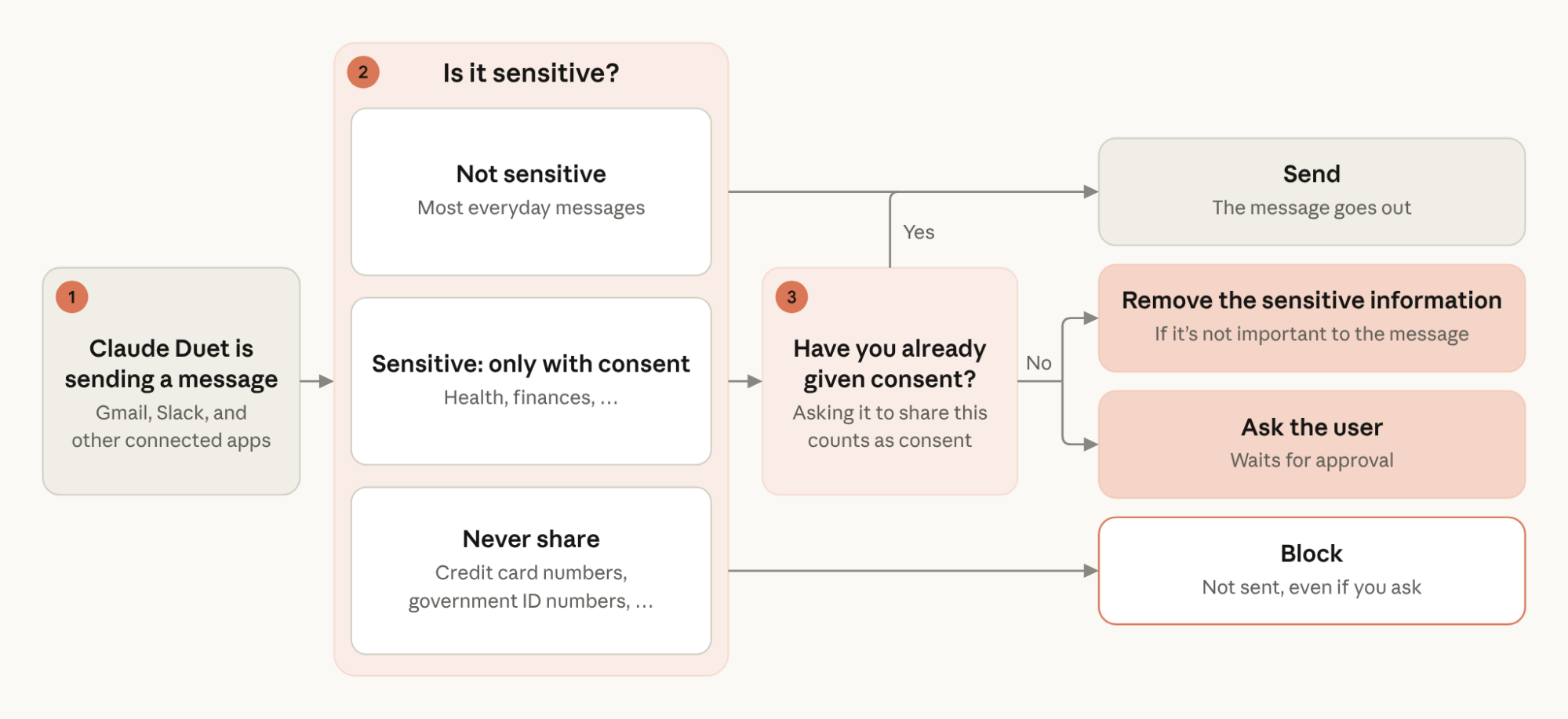
图 2. 您的信息可以流向何处:在发送任何内容之前,检查会权衡信息的敏感程度以及您是否已给予同意。
如果 Claude Duet 因上述任一原因被阻止,它可以决定重写消息、去掉敏感信息,然后交给您审批。
Claude Duet 仍处于研究预览阶段,这些防护措施偶尔会遗漏某些内容,或把无害的消息标记出来。因此,它们与上述审批机制协同工作,这些机制旨在让您掌控 Claude Duet 代表您发送的内容。随着我们对人们如何使用 Claude Duet 的了解不断深入,我们预计会继续改进我们的分类器。
## 您可以查看任务和已连接的应用
您可以在任务列表中看到 Claude Duet 已完成和正在做的事情,每个任务都有自己的页面,您还可以在任务进行中引导它。Claude Duet 会保留您的对话历史和记忆,以便在任务之间延续上下文,直到您删除或重置历史记录。删除您的账户会清除 Claude Duet 存储的所有内容。
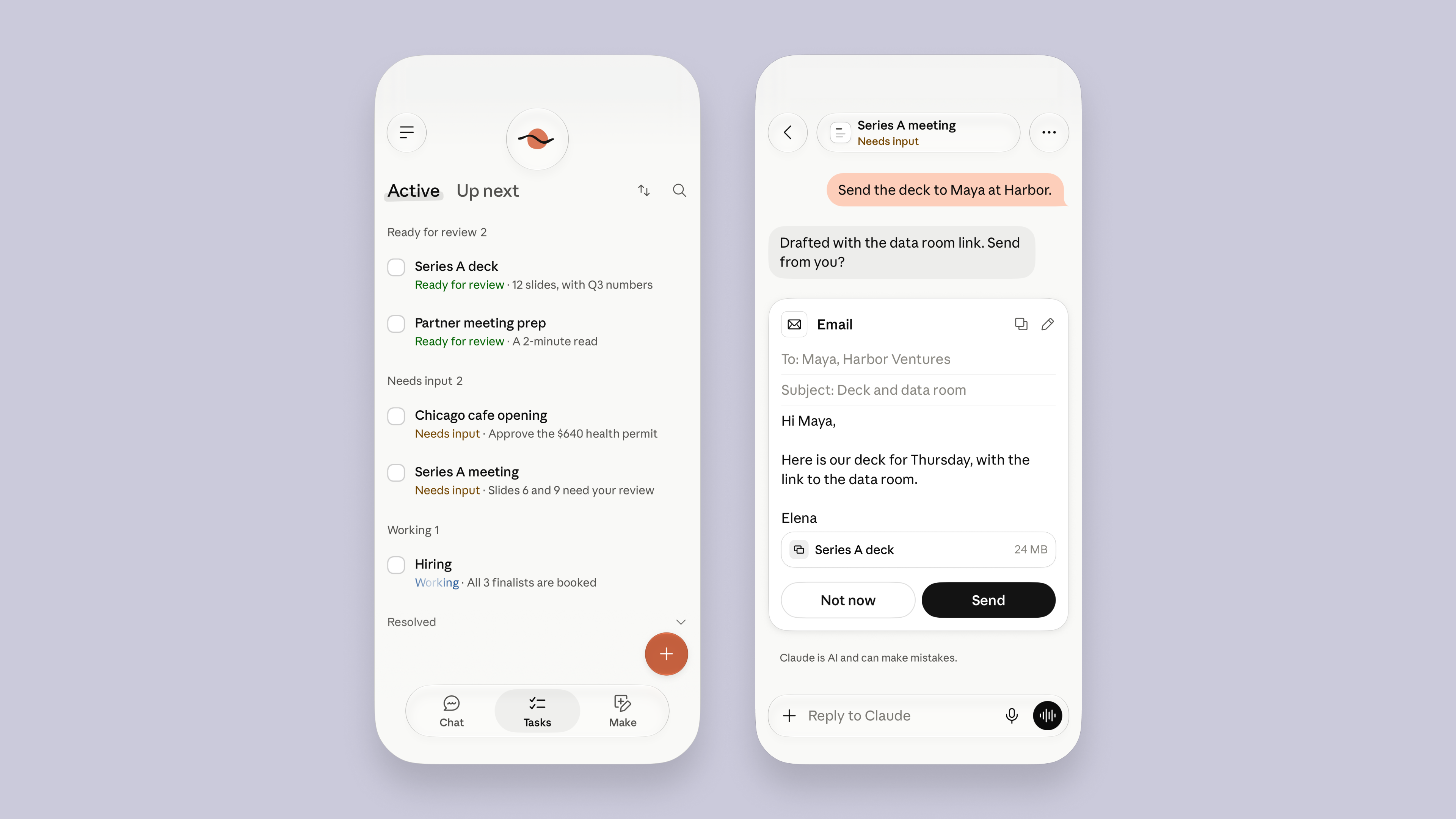
您已连接到 Claude 的应用会延续到 Claude Duet,在一处关闭某个应用,两处都会关闭。断开某个应用的连接会从那一刻起停止新的访问,但 Claude Duet 已从该应用学到的内容会保留,直到您重置其记忆,您可以随时从该应用的设置中执行此操作。Claude Duet 还会使用您 Claude 账户中的记忆,因此 Claude 从您早期聊天中记住的细节是可见的。
## 凭据和浏览器与模型隔离
Claude Duet 永远看不到您的密码、浏览器 Cookie 或已连接应用的登录令牌,也无法将它们保存到记忆中。它们只会经过模型无法访问的独立机器,而管理其行为的审批和安全检查也在那里运行。
**密码**
当网站要求输入密码时,你在 Claude 应用内的表单中输入密码。该表单会用一次性密钥对其进行加密,该密钥仅存在于我们的安全云浏览器机器上,且仅用于这一次。它将加密后的密码原封不动地传递给浏览器,由浏览器将其输入到网站中。模型看不到密码,也无法保存或重复使用它。很快你还可以使用 1Password 登录;Claude Duet 会请求凭据,你在 1Password 中批准该请求,凭据便会发送到浏览器,而不会经过模型。
替你登录的智能体会从两个方面改变网络钓鱼的形态。一方面,Claude Duet 不为你持有凭据,因此无法被钓鱼获取密码,也没有任何隐藏指令能让它泄露它并不拥有的秘密。另一方面,登录表单本身就是一个目标,因为任何要求输入密码的东西都可能被仿冒。因此,Claude Duet 的登录表单只会出现在应用内,且仅在你主动发起的登录过程中出现。它绝不会以链接、短信、电子邮件或 claude.ai 以外网站的形式出现。如果有任何看似 Claude Duet 的东西在其他地方要求你输入密码,那它就不是合法的。
**登录令牌**
当 Claude Duet 在已连接的应用中工作时,它遵循[我们的 Claude Managed Agents 设计(在新标签页中打开)](https://www.anthropic.com/engineering/managed-agents),使凭据始终处于智能体工作范围之外。智能体代表你使用的凭据(例如已连接服务的登录令牌)绝不会进入智能体工作所在的机器。取而代之的是,那里放置一个凭据占位符,而该机器外部的代理仅在发出请求时填入真实值。
**浏览器**
Claude Duet 中的浏览器运行在云端一台独立的专用虚拟机中,与模型以及智能体工作所用的云计算机相互隔离。智能体仅通过一组固定命令来驱动浏览器:_打开此页面、点击此处、输入此内容_。网站运行的任何内容[都留在浏览器机器上(在新标签页中打开)](https://www.anthropic.com/engineering/managed-agents)。网站的代码和 Cookie 不会进入 Claude Duet 的内存或你连接的应用,智能体的任何命令也无法从浏览器中读取 Cookie。真正返回的是页面文本和下载内容,因为智能体必须读取它们才能完成工作。这就是为什么存在其他检查,也是为什么 Claude Duet 还使用了我们在[浏览器使用研究(在新标签页中打开)](https://www.anthropic.com/research/prompt-injection-defenses)中描述的提示注入防护措施。它通过浏览器上传的文件会接受与其消息相同的敏感信息检查。
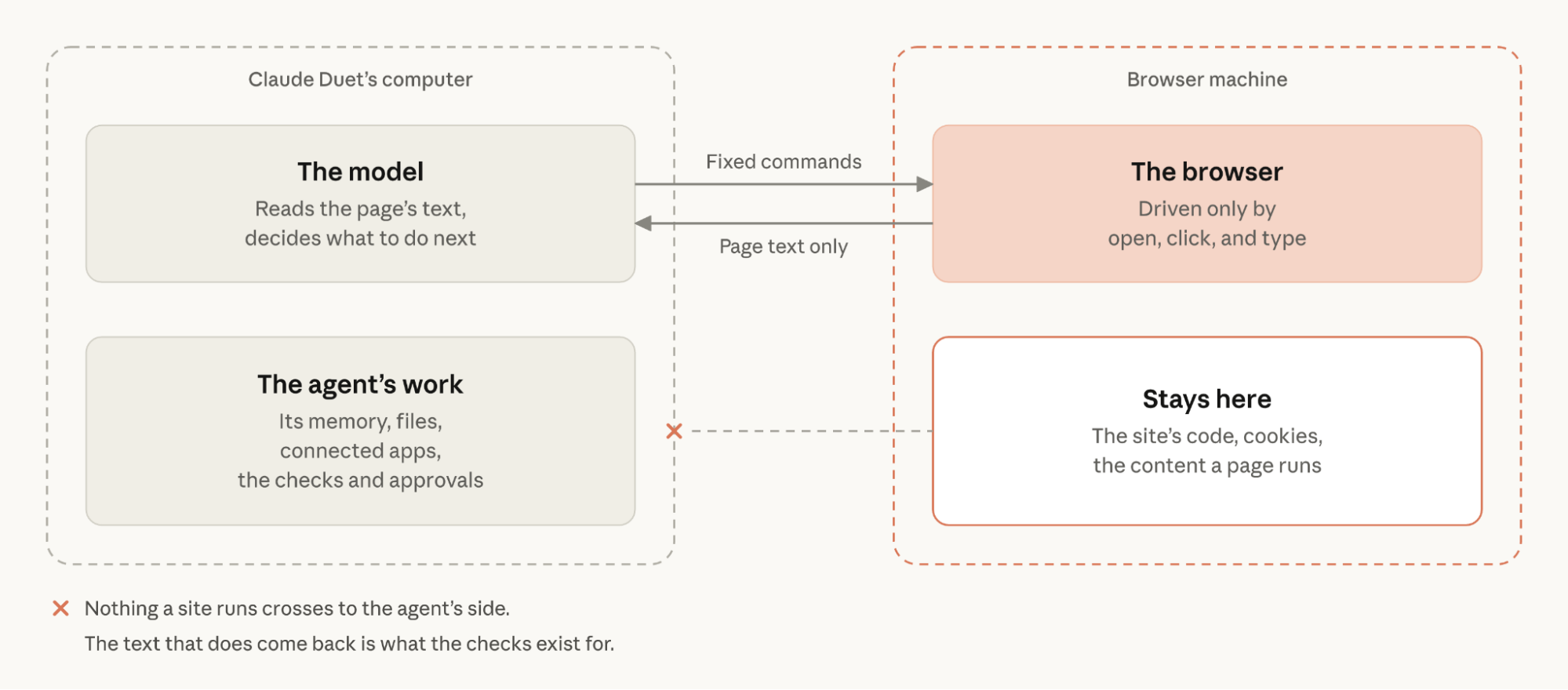
图 3. 浏览器边界:固定命令传出,页面文本返回,而网站的代码、Cookie 和下载内容留在浏览器机器上。
Claude Duet 在设计上也要求表明自己是智能体。目前,其网络浏览器发送的请求包含一个独特的 User-Agent 标头,并且我们公布其浏览时使用的公共 IP 地址,以便网站能够识别它并决定如何处理它。在发布之前,我们还联系了几家大型网站,给它们选择阻止 Claude Duet 访问其网站的权利,其中一些选择了阻止。随着我们从研究预览中学习,我们将继续改进 Claude Duet 表明自身身份的方式。
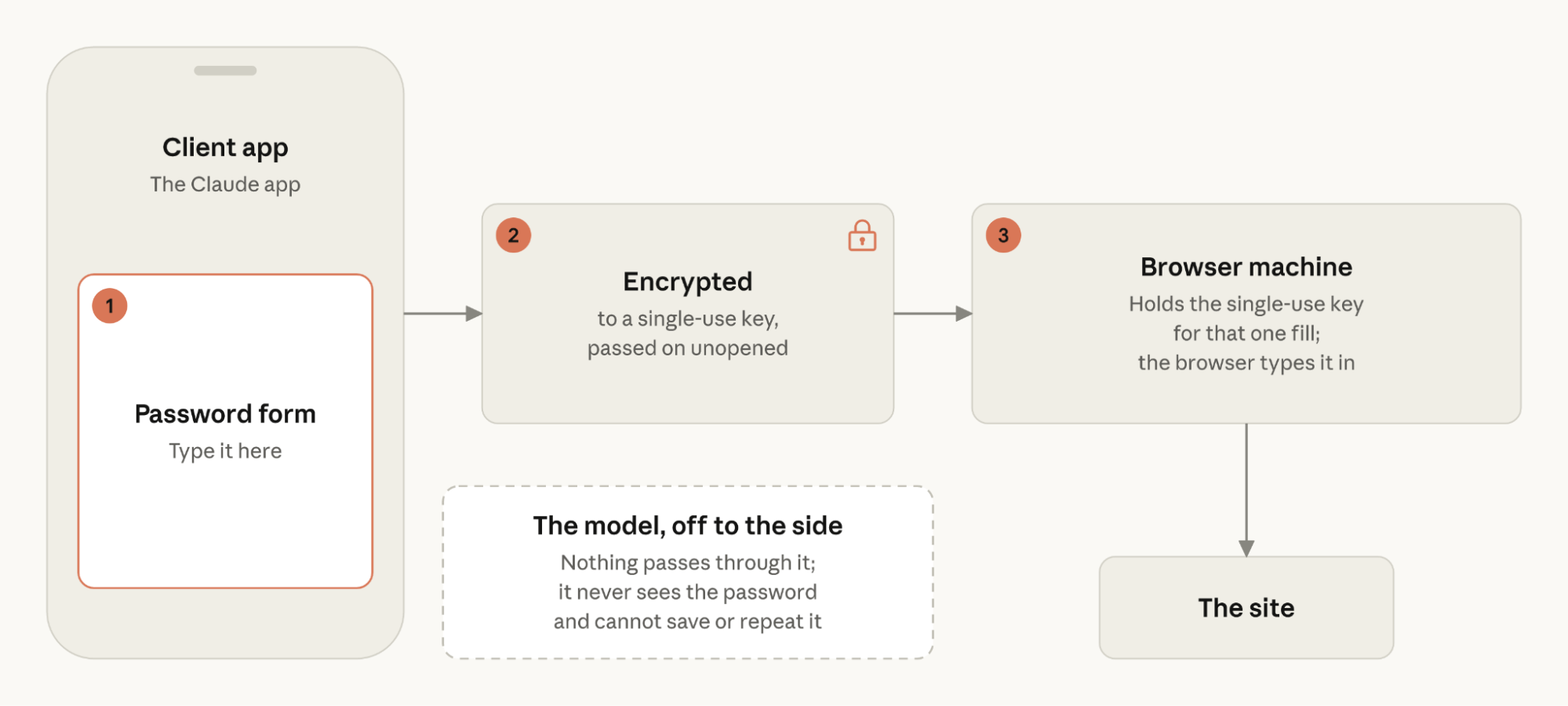
图 4. 凭据路径:密码在你的手机上加密,仅在浏览器机器上解密,且绝不经过模型。
## 我们如何测试 Claude Duet
测试早在研究预览之前就已开始,并且现在仍在继续。我们的保障团队基于常规形态的任务构建了评估,每个任务都有三个变体:一个无害版本、一个注入指令的版本,以及一个诱使智能体做超出要求之事的版本。这些评估与来自真实使用的影子流量并行运行。
红队进一步测试了 Claude Duet 是否会泄露信息、未经批准就行动,或遵循恶意提示。我们为整个系统构建了威胁模型,涵盖它所触及的各个代码仓库和信任边界。一家外部渗透测试公司在可访问我们源代码的情况下对 Claude Duet 进行了测试,而一项涵盖云浏览器和登录表单的后续合作正在进行中。每项新的凭据功能在向任何人发布之前,都会在隔离环境中接受红队测试。
Claude Duet 也在 Anthropic 公开漏洞赏金计划的范围内,该计划奖励有效的报告,并根据我们的负责任披露政策为善意研究提供安全港。如果你发现安全漏洞,我们希望听到你的消息:请通过 [HackerOne(在新标签页中打开)](https://hackerone.com/anthropic) 上的 Anthropic 漏洞赏金计划进行报告。
## 与你共同构建
我们以研究预览的形式发布 Claude Duet,是因为我们想了解你在个人智能体中看重什么,包括你希望接下来看到的保护措施和控制项。本文描述的部分内容仍在变化:它多久请求一次批准、你如何登录,以及敏感信息检查在区分私密信息与无害信息方面的准确程度。用平实的语言告诉 Claude Duet 你希望看到什么或哪里出了问题,它会为我们的团队提交一份报告。
## 正文 · 原文
[Claude Duet (opens in new tab)](https://claude.com/resources/articles/claude-duet) is an agent, currently in research preview, that uses a cloud-based computer to do work for you. It can use all the apps and services you've chosen to connect to Claude, and it runs continuously even after you close the app. It can read your inbox, draft replies, book things, and run routines while you are away. Our team runs Claude Duet on our own accounts and we use it for work every day.
We built Claude Duet on three principles to guide the agent's behavior:
1. Your information, and what other people share in your connected apps, is handled with discretion, using a new classifier that checks messages Claude Duet drafts before they go out.
2. You stay in control of what it does on your behalf.
3. Claude Duet never sees your passwords, browser cookies, sign-in tokens, or other credentials.
Claude Duet is new but the thinking behind it is not. In 2025 we [published our framework for safe and trustworthy agents (opens in new tab)](https://www.anthropic.com/news/our-framework-for-developing-safe-and-trustworthy-agents), which puts people in control and treats privacy and secure interactions as basic requirements. Since then, we have written about why [no single defense is enough (opens in new tab)](https://www.anthropic.com/research/trustworthy-agents) and why [protection inside the model can’t stand alone (opens in new tab)](https://www.anthropic.com/engineering/how-we-contain-claude). We also build and operate the infrastructure businesses use to run agents in production through [Claude Managed Agents (opens in new tab)](https://www.anthropic.com/engineering/managed-agents), and Claude Duet keeps credentials separate from the agent in the same way. It builds on this work, adding the protections that an agent acting for you needs. This post walks through what we added and what we’re still working on.
## You approve important actions
An agent that acts while you’re away has to know when to stop and ask for permission before proceeding, and to do it at the right cadence. Before Claude Duet does something like sending a potentially sensitive message, paying for something, or deleting anything, it shows you the action, the destination, and the content, including every recipient. It then waits for you to approve the action.
A separate, automated check runs alongside each action, built on [the auto mode classifier from Claude Code (opens in new tab)](https://www.anthropic.com/engineering/claude-code-auto-mode) and extended for Claude Duet. It assesses whether the action matches your intent. The check runs outside the model doing the work so instructions hidden in a page cannot affect the outcome.
Some actions stay off-limits even with your approval, like trading securities, banking actions such as moving money between accounts, and accessing someone else's account. Some other steps aren’t covered by a "don't ask me again" rule, however often you have approved them, like paying or sending money, deleting an order, or creating an account. The routines that run while you are away have the same safeguards.
We spent a lot of time calibrating how often Claude Duet asks for approval. Approval fatigue is a serious issue, because too many requests teach people to tap through them, sometimes without adequate consideration. We will continue to adjust this calibration over time.
For purchases, Claude Duet pays with a one-time card from a wallet like Link from Stripe, limited to that merchant and amount. You see the item and the total, and you approve the purchase in your Link app. Your real card number isn’t shared with Claude Duet or the merchant.

Figure 1. Approval flow: the approval card and the separate check sit outside the model, so nothing the agent reads can answer the card.
## Your information is handled with discretion
An agent that reads your email and sends messages for you is constantly deciding where different types of information should go. If you ask Claude Duet to send your team a weekly recap, it should include only things everyone on the team already has access to and never private details, like your performance review conversations.
To address this, we built a new safety classifier that runs separately from the main model and checks whether each message Claude Duet is about to send contains potentially sensitive information. We categorize this information into two tiers:
- **Never share:** We give the most sensitive protection to information like sign-in credentials, full card and bank account numbers, and government ID numbers. Claude Duet is instructed never to share these with anyone, even if you ask.
- **Needs consent to share:** Claude Duet will share other private information, such as health or finances, only if you’ve explicitly approved it. Your own request counts as consent, so “send a note to my dentist about my tooth pain” generally won’t need additional approval.

Figure 2. Where your information can go: before anything is sent, the check weighs how sensitive the information is and whether you’ve given consent.
If Claude Duet is blocked for either reason, it can decide to rewrite the message without the sensitive information and share with you for approval.
Claude Duet is still in research preview and these safeguards will occasionally miss something or flag a harmless message. That’s why they work alongside the approval mechanisms above, which are designed to keep you in control of what Claude Duet sends on your behalf. We expect to continue iterating on our classifier as we learn more about how people use Claude Duet.
## You have visibility into tasks and connected apps
You can see what Claude Duet has done and is doing in its task list, where each task has its own page, and steer it mid-task. Claude Duet keeps your conversation history and its memory so it can carry context between tasks, until you delete your history or reset it. Deleting your account wipes everything Claude Duet has stored.

The apps you have connected to Claude carry over to Claude Duet, and switching an app off in one place switches it off in both. Disconnecting an app stops new access from that moment, but what Claude Duet already learned from it stays until you reset its memory, which you can do anytime from the app’s settings. Claude Duet also uses the memory from your Claude account, so details Claude remembered from your earlier chats are visible.
## Credentials and the browser are isolated from the model
Claude Duet never sees your passwords, browser cookies, or the sign-in tokens for your connected apps, and it can’t save them to its memory. They only ever pass through separate machines the model can’t access, and the approvals and safety checks that govern what it does run there too.
**Passwords**
When a site asks for a password, you type it into a form inside the Claude app. The form encrypts it with a single-use key that exists only on our secure cloud browser machine, for that one single use. It passes the encrypted password unopened to the browser, which types it into the site. The model doesn’t see the password and can’t save or repeat it. Soon you will also be able to sign in with 1Password; Claude Duet will ask for a credential, you will approve that request in 1Password, and the credential will go to the browser without passing through the model.
An agent that signs in for you changes phishing in two ways. On one hand, Claude Duet doesn’t hold credentials for you so it can’t be phished for a password, and no hidden instruction can make it reveal a secret it doesn’t have. On the other hand, the sign-in form is itself a target, because anything that asks for a password can be imitated. So Claude Duet’s sign-in form only appears inside the app, during a sign-in you asked for. It never arrives as a link, a text message, an email, or a website other than claude.ai. If something that looks like Claude Duet asks for your password anywhere else, it’s not legitimate.
**Sign-in tokens**
When Claude Duet works in a connected app, it follows [our Claude Managed Agents design (opens in new tab)](https://www.anthropic.com/engineering/managed-agents) so credentials stay out of reach of the agent’s work. Credentials that the agent uses on your behalf, such as a sign-in token for a connected service, never enter the machine where the agent works. A placeholder for the credential sits there instead and a proxy outside that machine puts in the real value only as a request is made.
**The browser**
Your browser in Claude Duet runs in its own dedicated virtual machine in the cloud, separate from the model and from the cloud computers the agent works on. The agent drives the browser only through a fixed set of commands: _open this page, click here, type this_. Whatever a site runs [stays on the browser machine (opens in new tab)](https://www.anthropic.com/engineering/managed-agents). The site’s code and cookies don’t reach Claude Duet’s memory or your connected apps, and none of the agent’s commands can read cookies out of the browser. What does come back is the page's text and downloads, because the agent has to read them to do its job. That’s why the other checks exist, and why Claude Duet also uses the prompt-injection safeguards described in our [browser-use research (opens in new tab)](https://www.anthropic.com/research/prompt-injection-defenses). Files it uploads through the browser get the same sensitive-information check as its messages.

Figure 3. The browser boundary: fixed commands go across, page text comes back, and the site's code, cookies, and downloads stay on the browser machine.
Claude Duet is also designed to identify itself as an agent. Today, requests that its web browser sends include a distinct User-Agent header, and we publish the public IP addresses it browses from, so sites can recognize it and decide how to treat it. Before launch, we also contacted several large websites and gave them the option to prevent Claude Duet from visiting their sites, and some chose to. We’ll keep refining how Claude Duet identifies itself as we learn from the research preview.

Figure 4. Credential path: the password is encrypted on your phone, opened only on the browser machine, and never passes through the model.
## How we tested Claude Duet
Testing started well before the research preview and continues now. Our Safeguards team built evaluations from routine-shaped tasks, each in three variants: an innocent version, one with injected instructions, and one that tempts the agent to do more than it was asked. Those run alongside shadow traffic from real use.
Red teams further tested whether Claude Duet would leak information, act without approval, or follow malicious prompts. We built a threat model of the whole system, across the repositories and trust boundaries it touches. An external penetration-testing firm tested Claude Duet with access to our source code, and a follow-on engagement covering the cloud browser and the sign-in form is running now. Each new credential feature is red-teamed on an isolated rig before it ships to anyone.
Claude Duet is also in scope of Anthropic’s public bug bounty program, which rewards valid reports and offers safe harbor for good-faith research, under our responsible disclosure policy. If you find a security vulnerability, we want to hear about it: report it through Anthropic’s bug bounty program on [HackerOne (opens in new tab)](https://hackerone.com/anthropic).
## Building this with you
We’re releasing Claude Duet as a research preview because we want to learn what you value in a personal agent, including the protections and controls you’d like to see next. Some of what’s described here is still changing: how often it asks for approval, how you sign in, and how well the sensitive-information checks tell what’s private from what’s harmless. Tell Claude Duet in plain words what you’d like to see or what went wrong, and it will file a report for our team.